
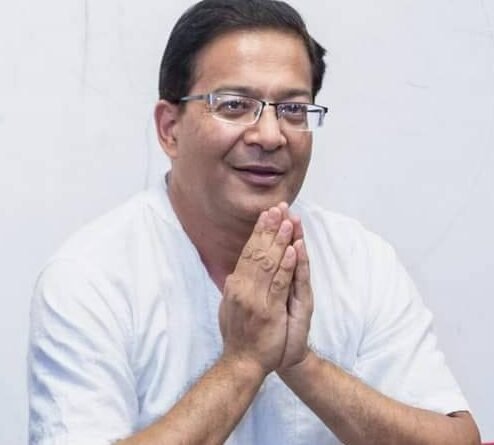
Before the Journey: A Personal Account of the Walk for Peace
A personal reflection on the early days of a historic peace journey in the United States
The month of May carries a special rhythm for Buddhists around the world. It is a time of remembrance, reflection, and celebration of Vesak—the birth, enlightenment, and passing of the Buddha. For those of us living in the Dallas–Fort Worth Metroplex, this period becomes especially intense, as the region is home to numerous Buddhist monasteries and communities, each hosting a series of interconnected observances.
What began as a routine season of service for me last year gradually unfolded into something far more significant. I found myself moving from one Vesak-related program to another—volunteering, coordinating, and participating across multiple temples and events—without realizing that this very journey would soon lead me to the early formation of what would become known as the Walk for Peace.
This is the story of how that unexpected path began.
Last year was particularly demanding for me. I volunteered at the International Vesak Celebration and the 10-day Tipiṭaka Chanting at Huong Dao Vipassana Bhavana Center in Fort Worth, followed by a two-day celebration at the Nepalese Buddhist temple in Euless, and later participated in the historic Vesak Day observance at the Texas State Capitol on May 15, 2025. In the latter two events, I served in an organizing capacity, which required considerable effort, coordination, and personal dedication. Yet even after these engagements, the season of celebration did not come to an end.
About a week after the Capitol program, I found myself at Gautama Buddhist Vihara in Allen—an approximately 51-mile drive from my home in Grand Prairie. Given the distance, I usually visit this monastery only a few times each year, primarily for major occasions such as Vesak and Kathina. The program itself was modest and serene, but it became one of the most unforgettable days of my life for an entirely different reason. It was there that I received an invitation—one that would draw me into what would soon become a history-making journey in the United States.
As the lunch offering to the venerable monks came to a close, there was a short break before the formal Dhamma talk. During that time, I approached the monks and paid respect to each of them one by one. There were about sixteen monks in attendance, including the abbot of the monastery, Bhante Wimalakitti. I did not have the opportunity to exchange pleasantries with each of them, but I do remember taking photographs with Bhante Pannadipa (abbot of Pannavasa Meditation Center) and Bhante Pannakara, and spending a few minutes speaking with them.
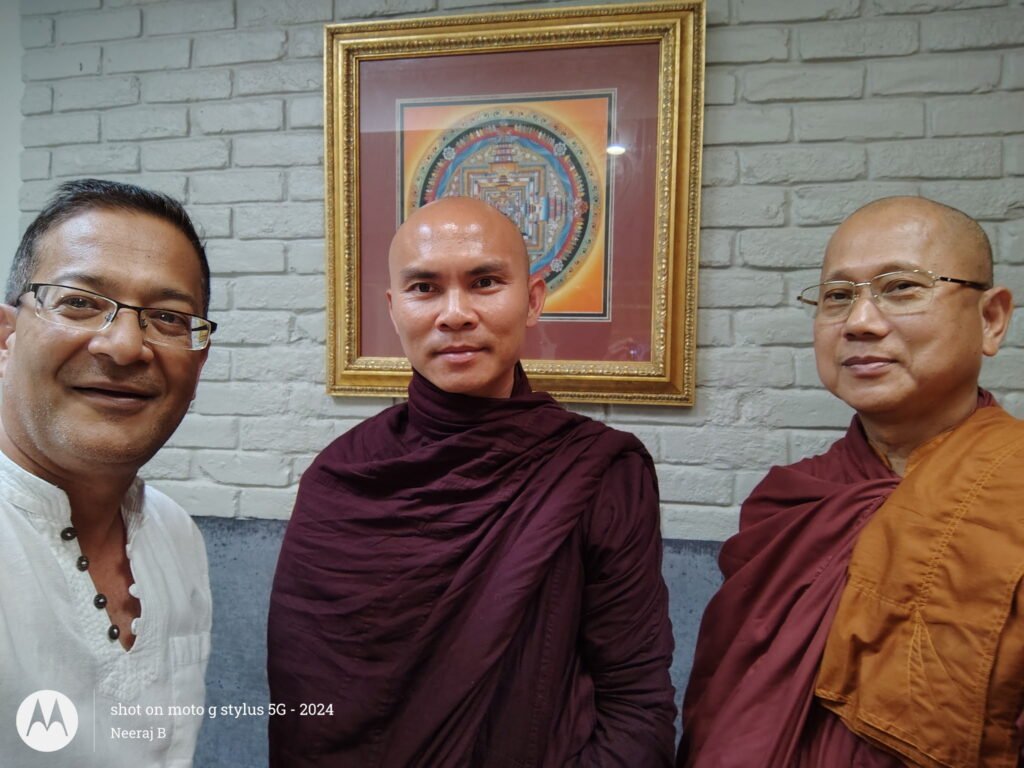
After spending ten days volunteering for the Tipiṭaka chanting program and collaborating during the State Capitol event, I had come to regard Bhante Pannakara as my teacher, and he, in turn, had accepted me as his assistant.
As the brief exchange continued, I remained near them, still reflecting on the sense of familiarity that had grown through shared service over the past months. What began as volunteering had gradually evolved into something deeper—an experience of trust, learning, and quiet companionship in Dhamma practice. I did not yet realize that this particular day would mark a turning point far beyond the routine rhythm of temple activities.
It was during this informal moment, between the completion of lunch offering and the upcoming Dhamma talk that the conversation quickly shifted. Bhante Pannakara’s tone was calm, yet there was a quiet urgency in his words. He spoke of an idea that was still taking shape in his mind—an ambitious plan to undertake a long-distance walk across the United States.
At first, I listened without fully grasping the depth of what was being proposed. Although I am aware that Dhammayatra has been an ancient tradition in Buddhism, in the context of America the idea was still fluid, almost unreal in its scale, yet it carried a quiet seriousness that was impossible to ignore. As he continued to speak, I began to sense that this was not simply another community program, but something far more profound—a commitment that would demand endurance, faith, and collective purpose.
The concept seemed simple yet extraordinary—walking thousands of miles across the country, relying on goodwill, discipline, and the timeless teachings of the Buddha. There were no guarantees, no clear roadmap, and very few resources. Yet there was conviction. And somehow, that conviction was contagious.
Then, unexpectedly, I was invited to be part of it. Unfortunately, as the program continued, we had to bring our brief discussion to a close.
On my way back home, I realized that I was already ready to take on whatever responsibility Bhante Pannakara might ask of me.
In the past, I used to be very skeptical. I would have asked a thousand questions and expressed doubt on many aspects of such a project. But that was when I used to be like a stone—strong, firm in my beliefs, but also rigid and unyielding. I often held on tightly to my views and emotions, without realizing how much I was closing myself off from change and understanding.
But since 2015, I have been undergoing a transformation. Over the past ten years, through experience and reflection, I have come to understand the value of being like dry leaves. Unlike stone, dry leaves are light, humble, and able to move with the winds of life. They do not resist change; instead, they accept it and flow with it. This shift taught me that strength is not always about hardness, but sometimes about softness, humility, and the ability to let go. On my drive back home, I realized that I was fully ready to be carried in the direction my teacher would guide me.
In the days that followed, that brief conversation initiated at the Gautama Vihara began to take on a life of its own. What initially felt like a distant and idealistic vision slowly transformed into a series of concrete discussions, brainstorming, and planning efforts. Before I realized it, I was no longer just a listener—I had become part of it.
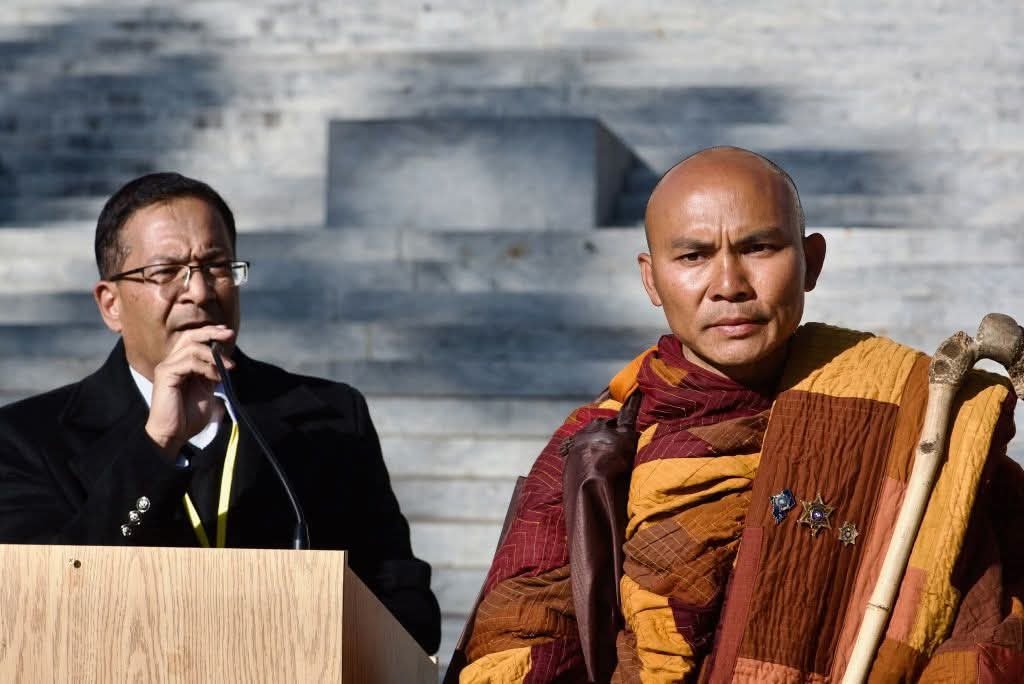
As the idea evolved, so did my role. What began as a simple willingness to help gradually turned into active involvement in early-stage coordination—helping connect people, discussing possible routes, and thinking through the practical realities of such an undertaking. Questions surfaced constantly: How would the monks travel across such vast distances? Where would they stay? Who would support them along the way? How should we safely navigate the long, daunting bridge stretch on Interstate 10 near Baton Rouge, LA? Each question revealed the enormity of the task.
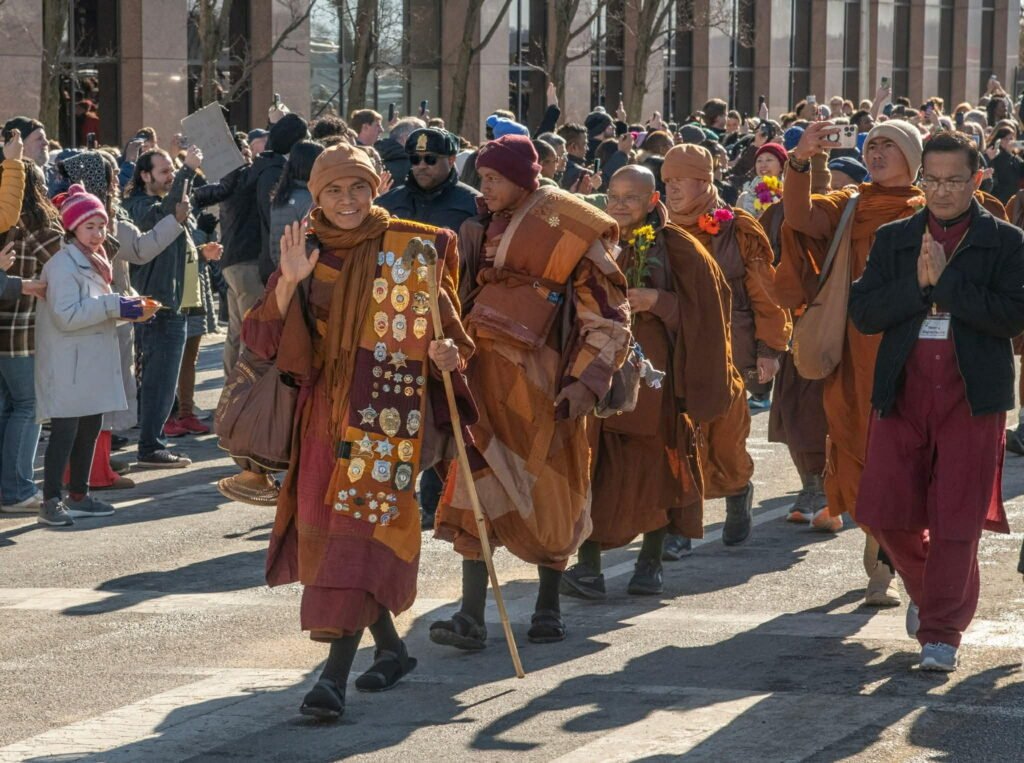
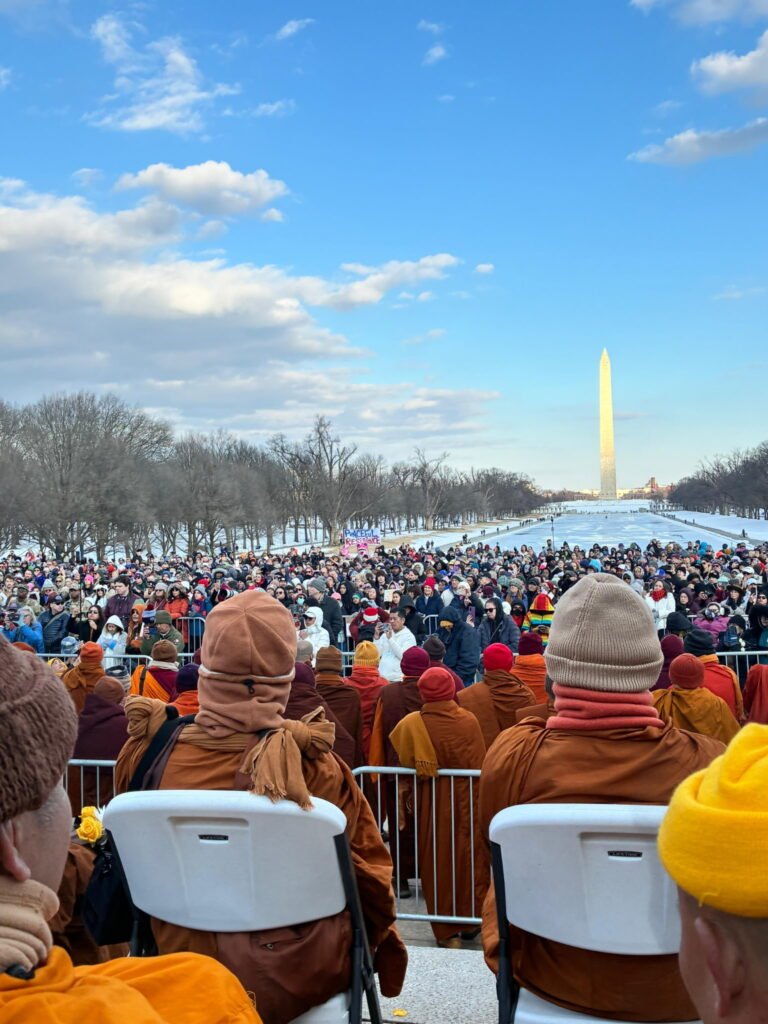
Looking back now, I realize that this was the true beginning of my journey with the Walk for Peace—not the public launch, not the media attention, but these quiet, uncertain early moments when the path was still unclear. It was in those conversations, filled with both doubt and conviction, that the foundation was laid. Without fully realizing it at the time, I had stepped into something that would soon grow far beyond anything I had imagined.
Dr. Neeraj Bajracharya,
Government Liaison and Press Coordinator,
Walk for Peace
Wonderfully well written reflections on your experience and the role you played in the Walk for Peace. I remember seeing you in many of the videos and I often wondered what your role was and how your participation came about…and now you have shared your story. So many hearts and minds were changed by the Walk for Peace…so many profound transformations. I look forward to everything Elevate Buddhist Journal will contribute to my exploration of the exquisite Buddhist teachings.
Thank you, Sheila.
Thank you for your commitment, your humility an being part of something that has profoundly changed my life. From Québec, Canada.🙏🙏🙏
This is a great initiative. I am an academic in one of the national universities in Sri Lanka. Hope to contribute to the journal in future. Namo Buddhaya! Triple Gem Blessings 🙏🙏🙏
Hi Kanchana, please share you story\research article soon. Thank you.
Thank you for sharing this beautiful account. I loved the imagery of dried leaves, dried up to old ways of thinking and being yet light enough to travel to change and new experiences.
Thank you, Debra.
I cannot imagine what the Walk for Peace experience was like for you, or anybody else that was involved. The venerable monk walkers, the volunteers, the people who came out to see them all. The Walk for Peace somehow found me on Face Book in Australia mid way through December and I was hooked from the very beginning to the very end.. and still am. It was one of the most amazing things I have ever witnessed and also one of the most profound and I truly believe that this time in history and of the Buddhist teachings to the Western World and the reawakening to the people of Sri Lanka to go back to their Buddhist way of living is just the beginning of what is yet to come far and wide. Venerable Pannakarra was the perfect man/monk to lead the walk and give his talks and it was the right time as he mentioned. There is definitely a shift of energies and awakenings that has already been happening and this mission has and will change the world into a better home for all living beings eventually. Thank you for your reflection, thank you for your input. I always noticed the man walking in front and next to the leader with his hands held together with every step you took also and saw such respect that was given. That was you. We noticed though at the time we didn’t know your part. It just shows that you never know what tomorrow will bring into our lives, but Oh boy.. what a journey your path has given you to walk down. Sadhu and thank you. Please pass on a message to Ven Pannnakara to rest and rest up big time now the event ending with the 24,000 candle lights has come to an end (I donated 5). He does run on the energies of those around him but his beautiful soul is carried inside a human body and it needs to take a break for a short while to recuperate.. I envy your connection to the monks who walked for all of us for peace. It will happen.. It will. Take care Neeraj. I’d say you need to rest also.
Hi Janet, thank you so much for joining us all the way from Down Under. We truly appreciate your support and are delighted to have you with us.
I really enjoyed reading this. I am hoping to get copy of Venerable Bhikkhu Pannakara book in English. I want to learn as much ad possible about the Monk tradition. Thank you all for the W4P
Thank you, Doris. Keep reading Elevate as we plan to publish stories related to monastic traditions in the coming days.
Hello Dr. Neeraj Bajracharya, thank you for your magazine. What a magnificent encounter with your destiny you share with us. The walk for peace is changing mine as well, and like you, I don’t yet know its full implications. Warmest regards, with peace Patricia
Thank you, Patricia.
The Walk For Peace was such a monumental undertaking and it couldn’t have proceeded so smoothly without your incredible and capable planning and management. Perhaps it was chaotic at times behind the scenes, but the chaos never showed up on our screens. You were always at Bante’s side, anticipating his every need, when it counted the most. Your total commitment to the mission was most evident at the Lincoln Memorial and at the Homecoming in Fort Worth. The emotion on your face reflected what we were all feeling. The tears we all could no longer hold back when at last, this once impossible mission was accomplished. Thank you so much for your dedication and boundless efforts to bring The Walk For Peace to its amazing, inspiring, and wildly successful conclusion.
I have just one question. I always assumed seeing Ajahn Supalak, Ajahn Ratanasak, Jennifer, and others documenting The Walk with videos, still photography, and drone footage; that there might be a documentary in the works. Is there anything like this planned? I’m sure that I’m not the only follower that would love to see it all put together with behind the scenes stories and human interactions along the way.
To just say “thank you” doesn’t seem adequate.
Sadhu, Sadhu, Sadhu.
Wonderfully written! I especially love this part…
“Unlike stone, dry leaves are light, humble, and able to move with the winds of life. They do not resist change; instead, they accept it and flow with it. This shift taught me that strength is not always about hardness, but sometimes about softness, humility, and the ability to let go. “