Pātāka Relic Casket Deserves International Study, Says Ven. Anil Sakya
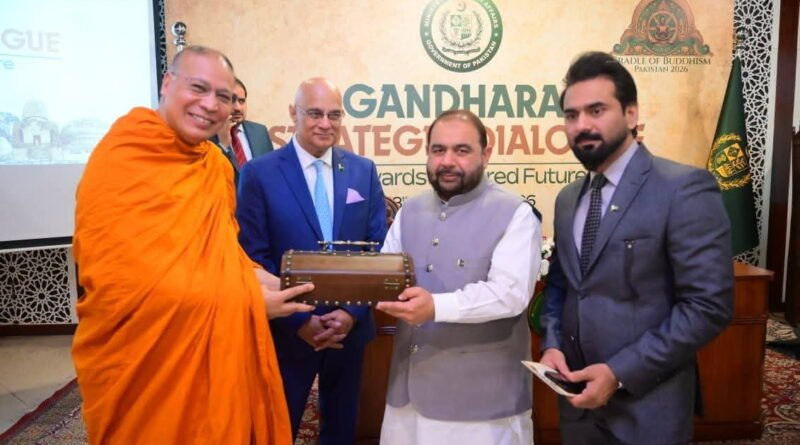
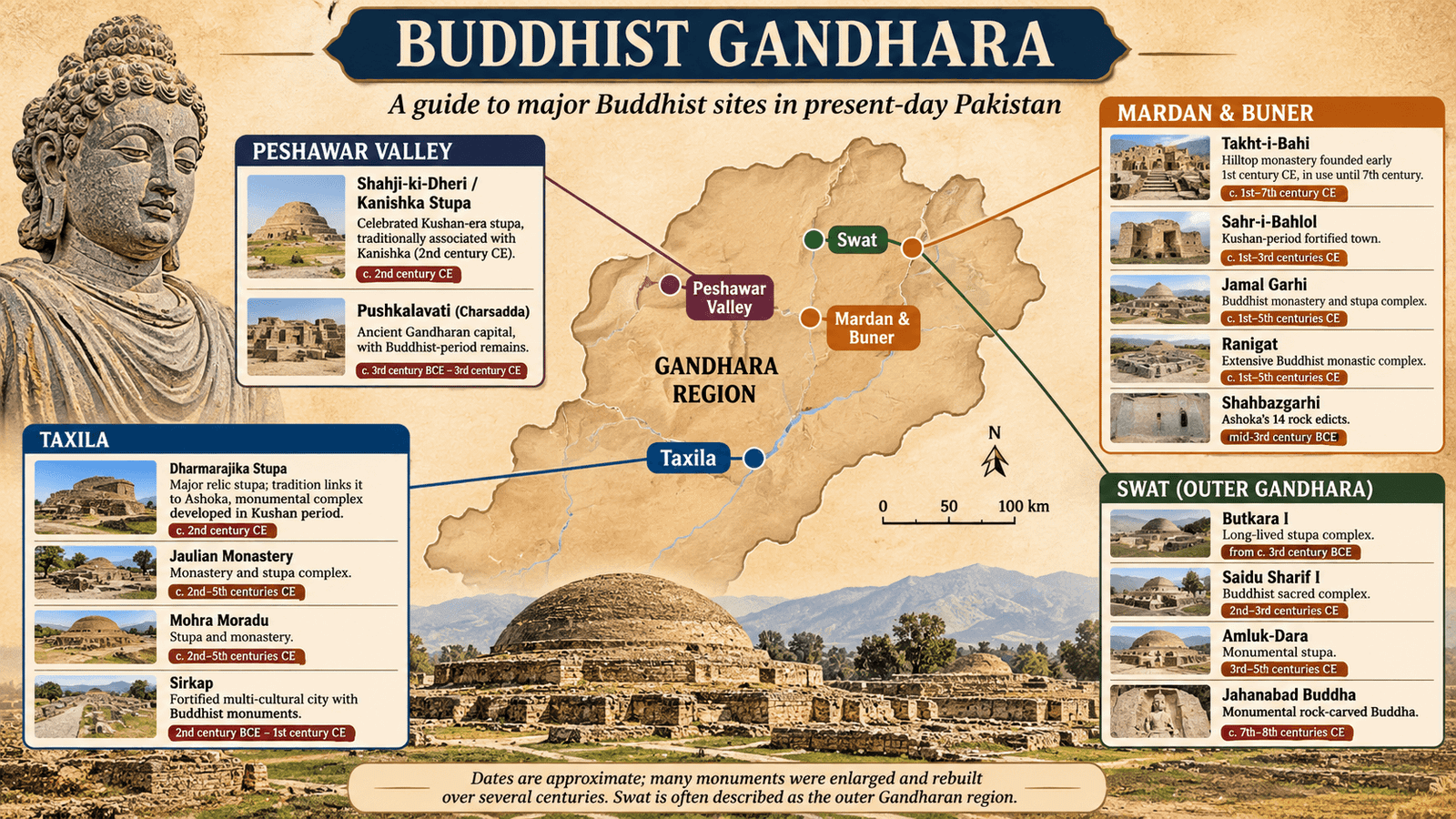
ISLAMABAD, November 18, 2026 — An ancient Buddhist relic collection from Pātāka in Pakistan’s Swat Valley deserves closer international attention, according to Most Venerable Dr. Phra Anil Sakya of Thailand. He has called for experts from different fields to study the collection and establish its history and possible religious significance.
Speaking at the Gandhara Strategic Dialogue 2026 in Islamabad, Ven. Sakya said he had personally examined the collection, which is now held at the University of Peshawar. He noticed similarities between some of its precious jewellery offerings and those discovered at Piprahwa in India by British engineer William Claxton Peppé in 1898.
“The casket differs in shape and has no known inscription, but these similarities warrant serious international study,” he said in remarks shared with Elevate: A Buddhist Journal.
The Piprahwa discovery is important in Buddhist archaeology. An inscription associated with the Piprahwa relic deposit has traditionally been interpreted as referring to relics of the Buddha belonging to the Sakya clan. The site and its inscription have received considerable scholarly attention, although questions about their interpretation and historical context have also been discussed.
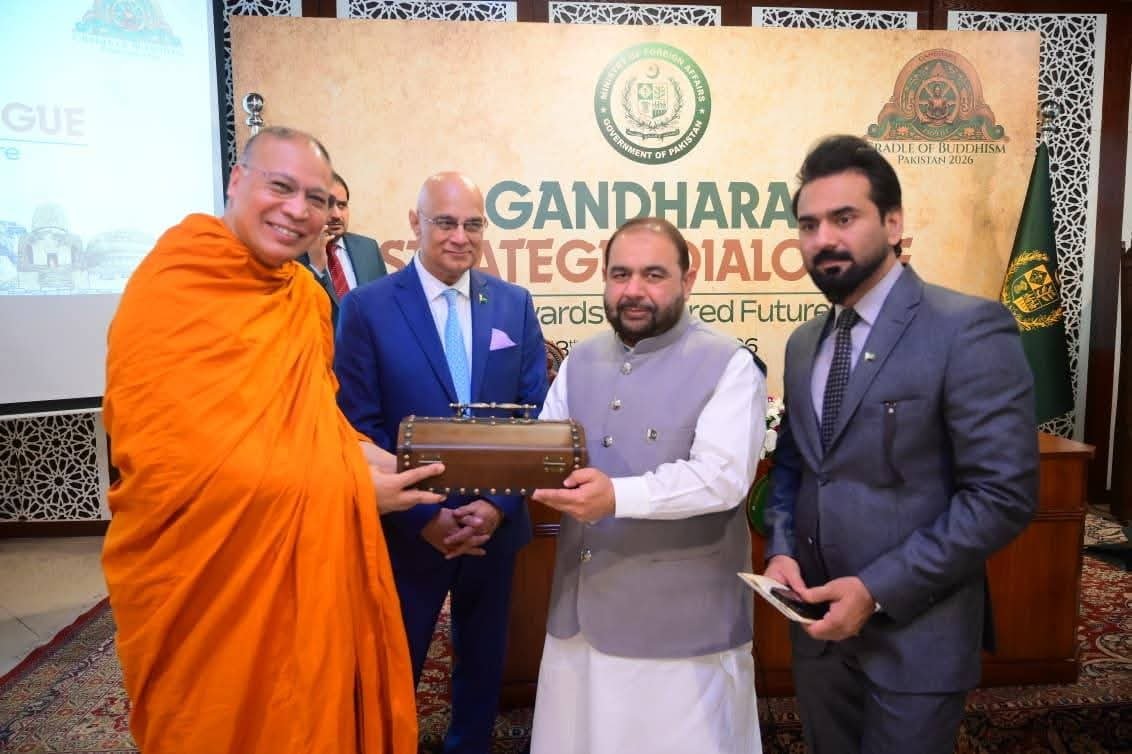
Ven. Sakya suggested that the Pātāka collection could be an exceptionally important sacred relic deposit, potentially associated with the Buddha. He also pointed out that the original casket, its offerings and the surrounding material appear to remain together, undisturbed and unrearranged. In his view, this makes the collection particularly remarkable.
However, its identity and provenance have not yet been established. The similarities in jewellery offerings may provide a reason for further investigation, but they do not prove that the Pātāka and Piprahwa discoveries are connected.
The absence of a known inscription makes careful examination especially important. Archaeologists and historians would need to study the objects, their materials, their dating and the circumstances in which they were discovered before reaching conclusions about their origin.
There is also earlier academic research on the Pātāka site. In 1997, Muhammad Farooq Swāti published a study titled Pre-Kuṣāṇa Reliquaries from Pātaka, Swāt in the Journal of the Royal Asiatic Society. The article examines reliquaries from the Buddhist site and provides an important starting point for further research into Pātāka’s archaeological history. It should not, however, be assumed that the objects discussed in that study are the same casket examined by Ven. Sakya.
Ven. Sakya called for archaeologists, historians, conservation experts and Buddhist monastic leaders to work together. A study involving specialists from different countries could help establish the collection’s history and determine its significance within the wider Buddhist heritage of the region.
Buddhist Leaders from Eight Countries Share Proposals
Ven. Sakya’s remarks were part of a wider discussion at the Gandhara Strategic Dialogue, held under the theme “Towards a Shared Future.” The meeting brought together senior Buddhist monastics from Thailand, Laos, Vietnam, Japan, Cambodia, Sri Lanka, South Korea and Bangladesh, along with international experts, diplomats and Pakistani officials.
Several delegates offered practical proposals for strengthening Buddhist connections with Pakistan and making its heritage sites more accessible to Buddhist communities.
Vietnamese Buddhist monk Thích Minh Quang called for suitable land to be provided for the establishment of a meditation hall. Japanese monastic Most Venerable Junsei Terasawa offered to visit Pakistan and work with local communities once land was designated for Buddhist activities. He also proposed holding a Gandhara Peace Convention in 2027 and pledged his support for the initiative.
Cambodian Buddhist representative Most Venerable Dr. Yon Seng Yeath expressed interest in establishing “Gandhara Corners” at two Pakistani universities. These centers could introduce students and researchers to Gandhara’s Buddhist history and provide opportunities for academic exchange. He said the proposal had already been discussed with Imran Shauket, Coordinator of the Prime Minister’s Task Force on Gandhara.
Participants also called for better transport, reliable information, appropriate security and facilities that take account of the religious needs of Buddhist monks and pilgrims visiting Pakistan.
A Shared Responsibility for Gandhara’s Heritage
Alongside the proposals from international Buddhist representatives, the Pakistani government outlined its own plans to strengthen engagement with Gandhara’s Buddhist heritage. Federal Minister for National Heritage and Culture Aurangzeb Khan Khichi spoke about providing land near important heritage sites for meditation halls and centers of learning. He also suggested exploring the possibility of a dedicated Buddhist heritage zone in Taxila or Khyber Pakhtunkhwa.
During the dialogue, curator Elli Takagaki unveiled Colours of Pakistan: Gandhara Edition, a publication presenting Gandharan heritage sites, Buddhist monastics and international engagement. Representatives of UNESCO and the World Bank also attended the event and expressed appreciation for the broader vision, according to the official announcement.
The international participation at the dialogue points to growing interest in reconnecting Buddhist communities with Gandhara, a region that played an important role in the development and spread of Buddhist art, learning and culture.
For the Pātāka collection, however, the most important next step is careful research. What does the casket contain? When was it deposited? Whose relics might it hold? These questions cannot be answered through visual similarities or religious traditions alone. They require archaeological evidence, scientific examination and careful historical study.
For Buddhists around the world, the possibility of a connection between the Pātāka collection and the Buddha makes it especially significant. But its identity and origin must first be established through careful research. An international study could help determine what this collection can tell us about the history of Buddhism in the region.
Sources
- Pakistan Press Information Department – Gandhara Strategic Dialogue Opens in Islamabad, November 18.
- Dawn – Monks visit Buddhist heritage site in Islamabad.
- The News International – Asian Buddhist leaders explore Gandhara heritage
- Lead Pakistan – Buddhist monastics propose meditation centres and university Gandhara Corners.
- Muhammad Farooq Swāti — 1997 Pre-Kuṣāṇa Reliquaries from Pātaka, Swāt — Journal of the Royal Asiatic Society Published in Journal of the Royal Asiatic Society, Volume 7, Issue 2, pages 249–255.
- Cambridge University Press — William Claxton Peppé and Vincent A. Smith The Piprāhwā Stūpa, Containing Relics of Buddha
- Most Venerable Dr. Phra Anil Sakya — Remarks delivered at the Gandhara Strategic Dialogue 2026, Islamabad, shared with Elevate: A Buddhist Journal, November 2026.