The Joy That Good Deeds Leave Behind
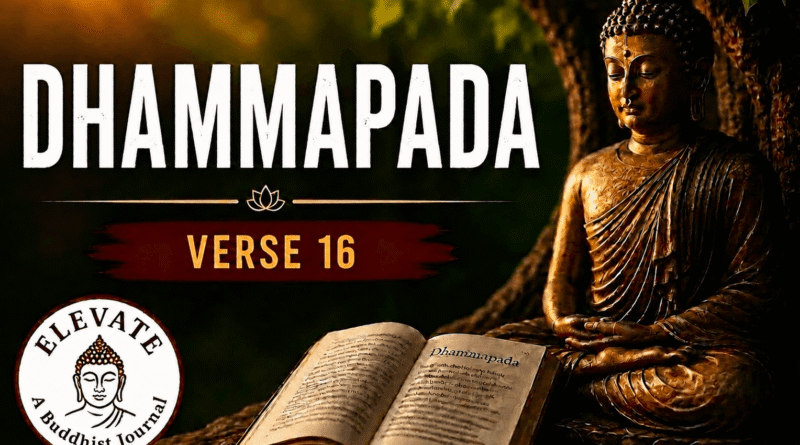
Dhammapada Verse 16
What if the greatest gift you could give yourself…is the life you choose to live today?
We often think of good deeds as something we do for others.
But the Buddha reminds us: Every wholesome action also shapes the person we become.
And that goodness can become a source of joy— not only now, but also in the future.
Today we explore Dhammapada Verse 16:
“The doer of good rejoices here,
and rejoices hereafter.
In both worlds, the doer of good rejoices,
seeing the purity of his actions.”
But what does this really mean?
The story of Dhammika Upāsaka, a devoted lay follower of the Buddha, gives us a beautiful example.
Dhammika lived in Sāvatthī. He was known for his virtue and generosity. He regularly offered food and other necessities to monks and encouraged others to practice generosity as well. His seven sons and seven daughters followed his example.
Dhammika’s life was not defined by wealth…but by how he used what he had.
Eventually, Dhammika became seriously ill. Knowing that death was near, he asked the Sangha to come and recite the Dhamma beside him. As the monks recited the Mahāsatipaṭṭhāna Sutta, something extraordinary happened. Six beautifully decorated celestial chariots appeared, each inviting Dhammika to a different heavenly realm. But Dhammika did not want the Dhamma recitation to be interrupted. He asked them to wait.
Eventually, he chose the chariot from Tusita, the realm associated with great joy and spiritual merit. He told his family: “If you wish to be reborn with me, do good deeds as I have done.”
Then he passed away and was reborn in Tusita.
The Buddha explained that Dhammika’s experience illustrated a simple truth: Good actions bring joy. Dhammika did not wait until the end of his life to experience that joy. He had already lived with generosity…with virtue…and with a heart committed to doing good.
And when the end came, he could look back without regret. This is the deeper meaning of the Buddha’s words: “He rejoices here, and rejoices hereafter.”
A wholesome life gives us something that money cannot buy—peace with ourselves.
We don’t need to perform extraordinary deeds to practice this teaching.
A kind word.
An act of generosity.
Helping someone in need.
Keeping a promise.
Choosing honesty when dishonesty would be easier.
Forgiving rather than seeking revenge.
These may seem like small actions. But every wholesome action shapes the mind. And over time, those actions become the character we carry with us.
So ask yourself today: What kind of life am I creating through my actions?
Because one day, we will all look back at the life we have lived. The question is: Will we see a life filled with regret—or a life we can rejoice in?
The Buddha’s message is simple: Good deeds are not merely gifts we give to others. They are gifts we give to our future selves.
When we live with generosity, compassion, and integrity, we create the conditions for joy—
here…and, according to the Buddha’s teaching, hereafter.
Do good today. Live well today. And let your actions become a life you can rejoice in.