When Goodness Becomes Joy
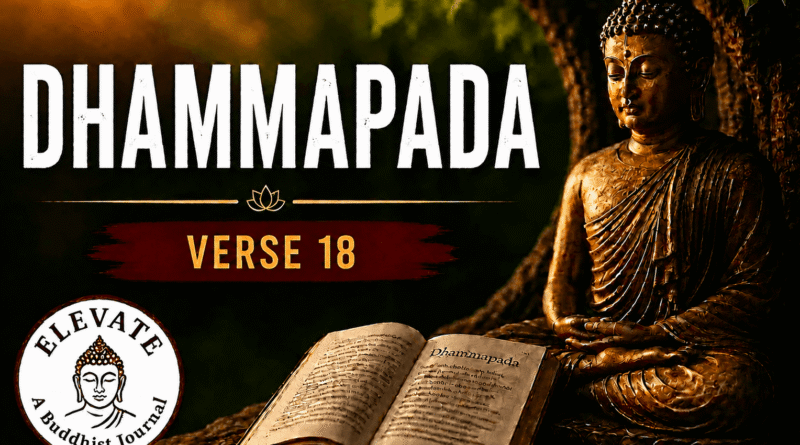
Dhammapada Verse 18
What if, at the end of your life, you could look back…and say with a peaceful heart: “I have done good.”
The Buddha teaches that wholesome actions bring something precious—joy.
Not only in this life…but, according to the Buddha’s teaching, beyond this life as well.
In this Episode we explore Dhammapada Verse 18.
“The doer of good rejoices here,
and rejoices hereafter.
In both worlds, the doer of good rejoices,
thinking, ‘Good have I done.’”
The story of Sumanādevī, the daughter of the Buddha’s great lay disciple Anāthapiṇḍika, illustrates this beautifully.
Sumanādevī grew up in a household devoted to generosity and the Dhamma. Her father regularly offered food and other necessities to thousands of monks. Sumanādevī followed his example. She lived virtuously, served the Sangha, and developed deep understanding of the Buddha’s teaching.
Eventually, she became seriously ill. As she lay dying, her father came to see her. He called her affectionately by name. But she addressed him as “youngest brother.”
Her father was confused. He asked: “Are you afraid?”
She calmly replied: “I am not afraid.” Soon afterward, she passed away.
Her father was overwhelmed with grief and went to the Buddha. The Buddha reassured him: Sumanādevī had not been confused.
She had advanced further on the spiritual path than her father and had no fear of death. The Buddha then told him that she had been reborn in the Tusita heaven. Anāthapiṇḍika realized that his daughter had lived joyfully because of her wholesome life…and had gone to a fortunate rebirth.
This is the heart of Verse 18. Good actions do not simply help others. They transform us. Generosity weakens selfishness. Compassion softens the heart. Virtue brings freedom from regret. And a wholesome life gives us something deeply valuable: peace with ourselves.
We don’t have to wait until the end of life to experience this joy.
A kind word.
An act of generosity.
An honest choice.
An act of forgiveness.
Each one plants a wholesome seed. So ask yourself today: “What good have I done?”
And then ask: “What good can I do today?”
Because one day, when we look back on our lives, may we be able to say with a peaceful heart:
“Good have I done.”
That is the joy of a life well lived. Thank you for watching.
इध नंदति पेच्च नंदति, कतपुञ्ञो उभयत्थ नंदति।
“पुञ्ञं मे कत”न्ति नंदति, भिय्यो नंदति सुगतिं गतो॥
Idha nandati pecca nandati, katapuñño ubhayattha nandati |
puññaṃ me kataṃ ti nandati, bhiyyo nandati suggatiṃ gato ||