
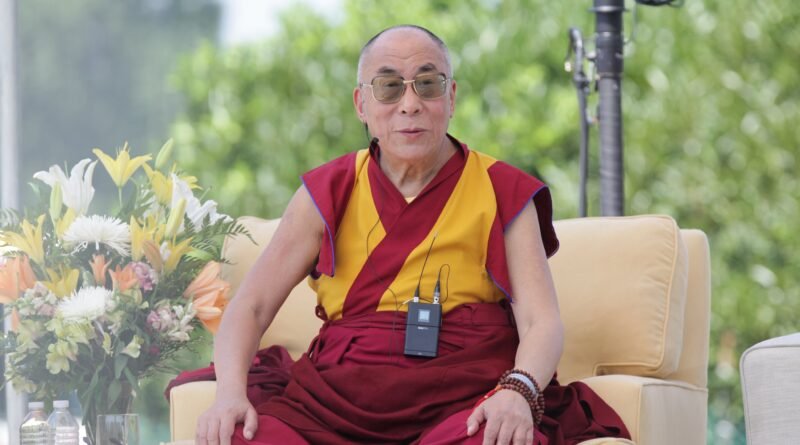
India Provides Delhi Bungalow for Dalai Lama’s Office Amid Succession Questions
By Elevate Desk
New Delhi, India — The Indian government has provided a government bungalow in New Delhi for the office of the 14th Dalai Lama, which is associated with the Gaden Phodrang Trust, the institution responsible for his religious and humanitarian work. The development comes at a time when questions surrounding the future of the Dalai Lama institution and the recognition of his successor are receiving increasing international attention.
According to a report published by The Indian Express on November 24, the property is located at 20 Pandit Ravi Shankar Shukla Lane in Lutyens’ Delhi, an important administrative and diplomatic district of the Indian capital. The newspaper reported that the bungalow had undergone renovation and that additional security arrangements were being installed. It also reported that the Central Public Works Department had floated a tender worth ₹34.94 lakh (US $ 36,400 approx.) in July 2026 for security improvements at the property, including strengthening its boundary wall and gates.
The Ministry of External Affairs reportedly requested the accommodation from the Ministry of Housing and Urban Affairs in 2025. The property was transferred to the External Affairs Ministry in October that year for operational purposes. The government has not issued a detailed public explanation of the allotment, and the newspaper reported that the Ministry of External Affairs had not responded to its inquiry.
The Role of Gaden Phodrang
Gaden Phodrang has a long history associated with the institution of the Dalai Lama. Originally established in 1518 as the administrative office for the Dalai Lama’s estate, it later became the name of the Tibetan government under the Fifth Dalai Lama.
Following the 14th Dalai Lama’s decision in 2011 to transfer his political authority to an elected Tibetan leadership, Gaden Phodrang was registered as a private trust in India. Its responsibilities include preserving the Dalai Lama institution and supporting his spiritual and humanitarian work.
Although both are connected to the Tibetan community in exile, Gaden Phodrang and the Central Tibetan Administration serve different purposes. The latter is the democratically governed Tibetan exile administration based in Dharamshala, while Gaden Phodrang serves the Dalai Lama’s religious and institutional interests.
The Dalai Lama’s Position on His Successor
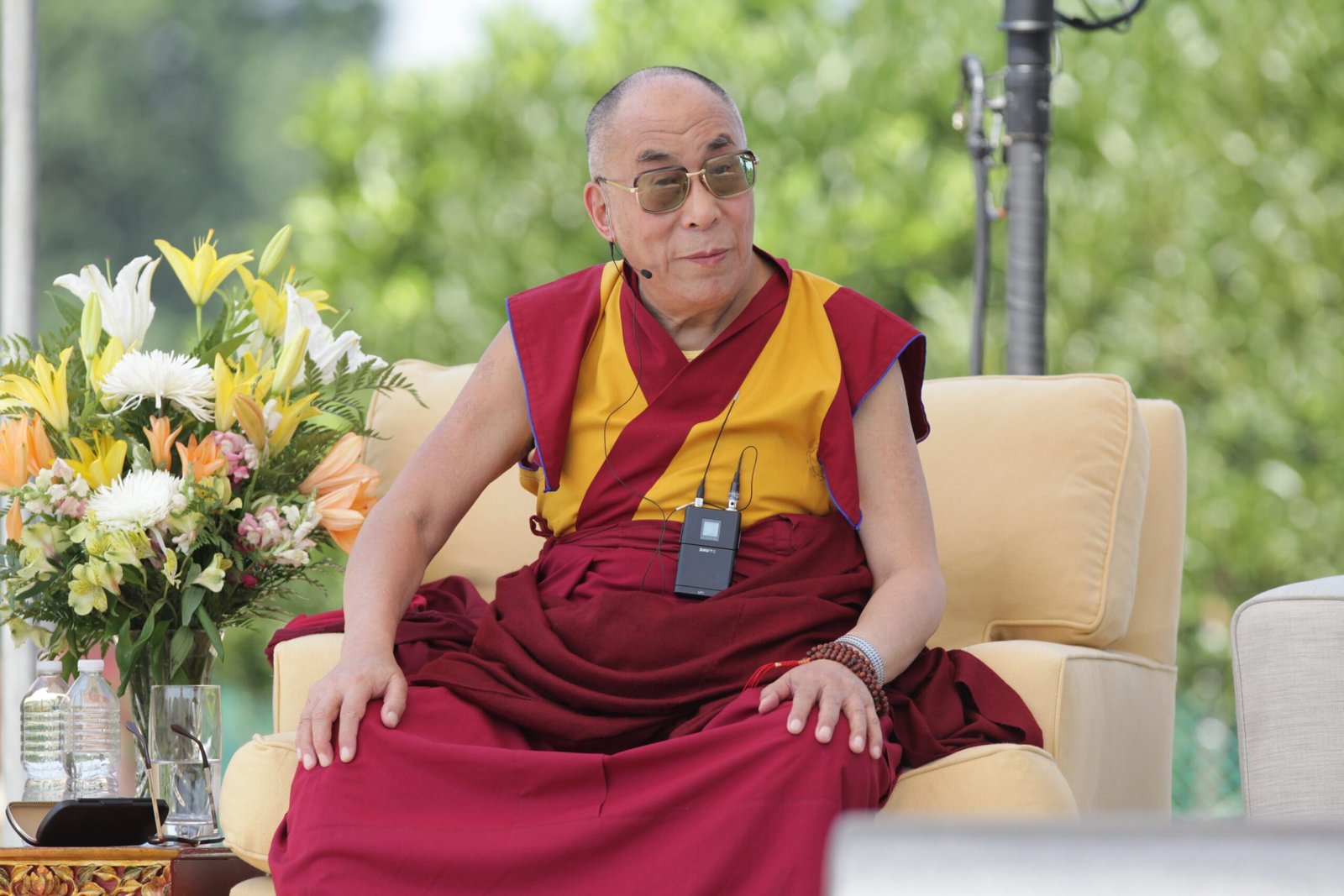
The question of succession became particularly significant following the Dalai Lama’s statement, released on July 2, 2025, affirming that the institution of the Dalai Lama would continue after his death.
In the statement, the Dalai Lama reaffirmed that the Gaden Phodrang Trust would have sole authority to recognize his future reincarnation. He said the Trust should consult the heads of the Tibetan Buddhist traditions and follow established religious procedures.
The statement followed years of discussion about whether the Dalai Lama institution would continue. It also addressed concerns among Tibetan Buddhists about who would oversee the recognition of the next spiritual leader.
The process of recognizing reincarnated spiritual teachers, known as tulkus in Tibetan Buddhism, has traditionally involved religious authorities, monastic institutions and established practices. The recognition of a new Dalai Lama is therefore an important religious matter for Tibetan Buddhist communities.
China’s Position on the Succession
The Chinese government maintains that it has authority over the recognition of the next Dalai Lama.
In 2007, China’s State Administration for Religious Affairs introduced Order No. 5, formally titled the Measures on the Management of the Reincarnation of Living Buddhas in Tibetan Buddhism. The regulations established government approval requirements for the recognition of reincarnated Tibetan Buddhist religious figures within China.
China’s position became particularly clear following the Dalai Lama’s 2025 announcement. On July 3, a Chinese Foreign Ministry spokesperson reiterated that the reincarnation of the Dalai Lama must follow established procedures, including a search within China, the Golden Urn process and approval by the central government.
The Golden Urn is a historical method associated with the Qing imperial administration for selecting reincarnated Tibetan Buddhist leaders. Its role and application have been subjects of historical and religious discussion.
The disagreement is significant because the Dalai Lama’s institution and the Chinese government maintain different positions on who has the authority to recognize his successor.
An earlier episode illustrates why the question attracts attention. On May 14, 1995, the Dalai Lama recognized six-year-old Gedhun Choekyi Nyima as the 11th Panchen Lama. Three days later, on May 17, Chinese authorities took the boy and his family into custody. According to the US Commission on International Religious Freedom (USCIRF), their whereabouts subsequently became unknown. Chinese authorities subsequently recognized another boy, Gyaincain Norbu (also known as Gyaltsen Norbu), for the position. Chinese officials have maintained that Gedhun is living a normal life under government protection. However, the US Department of State has reported that independent observers have not been allowed to verify his whereabouts or well-being. The case remains an important point of reference in discussions about the recognition of Tibetan Buddhist reincarnations.
The disagreement therefore extends beyond competing interpretations of religious tradition. If the Gaden Phodrang Trust recognizes one successor while the Chinese government recognizes another, Tibetan Buddhist communities and governments around the world could face competing claims to the legitimacy of the Dalai Lama institution. The consequences would reach beyond the religious sphere, affecting Tibetan communities, India’s relationship with China, and the broader international response to the succession.
India’s Position
India has maintained a careful public position on the succession question. The Dalai Lama has lived in India since 1959, when he fled Tibet following the uprising against Chinese rule. Dharamshala subsequently became his principal residence and the centre of the Tibetan exile community.
In a written response to a question in the Rajya Sabha on August 21, 2025, India’s Ministry of External Affairs stated that the government did not take a position on matters concerning religious beliefs and practices. It added that India had always upheld freedom of religion and that its position had been conveyed to China.
The new accommodation provides Gaden Phodrang with an additional presence in the national capital. The allotment, by itself, does not establish a change in India’s previously stated position on religious succession. However, providing the Dalai Lama’s office with a presence in New Delhi may carry institutional significance as the succession question approaches. New Delhi is the centre of India’s political decision-making, while Dharamshala remains the principal base of the Tibetan exile administration and the Dalai Lama’s institutional work. Whether the new premises will facilitate a wider institutional role for Gaden Phodrang or serve primarily as an administrative and practical facility remains unclear.
Looking Ahead
The succession question is also receiving attention beyond India and China. In its November 2026 report, the US-China Economic and Security Review Commission recommended that the United States establish a senior-level channel with India to discuss succession planning and possible Chinese influence operations. The recommendations are directed to the US Congress and do not establish that such discussions between Washington and New Delhi are already taking place.
The future recognition of the Dalai Lama will be closely followed by Tibetan Buddhist communities in Tibet, India, Nepal, Bhutan and other parts of the world. It will also have implications for the institutions and communities that look to the Dalai Lama as a spiritual leader.
India’s decision to provide accommodation for the Dalai Lama’s office comes at a consequential moment for the Tibetan Buddhist institution. Yet the significance of the allotment should not be overstated. India’s publicly stated position on religious succession remains unchanged, and the government has not explained whether the new premises will serve any broader institutional purpose. As the succession question draws greater international attention, the role that India and the Gaden Phodrang Trust ultimately assume may become increasingly important.
Sources
1. The Indian Express, “Government allots Lutyens’ Delhi bungalow to the Dalai Lama,” November 24, 2026. Read the original report.
2. The Office of His Holiness the Dalai Lama, “Statement Affirming the Continuation of the Institution of Dalai Lama,” July 2, 2025. Read the full statement.
3. Chinese Embassy in Canada, “Chinese Embassy Spokesperson’s Response to Media Question on the Reincarnation of the 14th Dalai Lama,” July 3, 2025. Read China’s official statement.
4. Government of India, Ministry of External Affairs, Rajya Sabha Unstarred Question No. 3278, “Dalai Lama’s Succession,” August 21, 2025. Read the parliamentary response.
5. U.S.-China Economic and Security Review Commission, 2026 Annual Report to Congress, November 2026.
6. Reuters, “What is the trust that will identify the Dalai Lama’s successor?” July 2, 2025. Read the report.
7. Congressional-Executive Commission on China, “Measures on the Management of the Reincarnation of Living Buddhas in Tibetan Buddhism,” Order No. 5, issued July 18, 2007, effective September 1, 2007. Read the translated regulations.
8. US Commission on International Religious Freedom, “USCIRF Calls for Release of the Panchen Lama,” April 24, 2020. USCIRF – Calls for Release of the Panchen Lama
9. US Department of State, “2023 Report on International Religious Freedom: China—Tibet,” 2024. US Department of State – Tibet Religious Freedom Report
10. Human Rights Watch, “China/Tibet: Panchen Lama Forcibly Disappeared for 30 Years,” May 15, 2025. Human Rights Watch – Panchen Lama Disappearance: 30 Years
Photo: Ang Kami Sherpa
So interesting.