
Who Is a Buddhist Monk? Bodh Gaya’s New ID Rule Raises Wider Questions
Elevate Desk
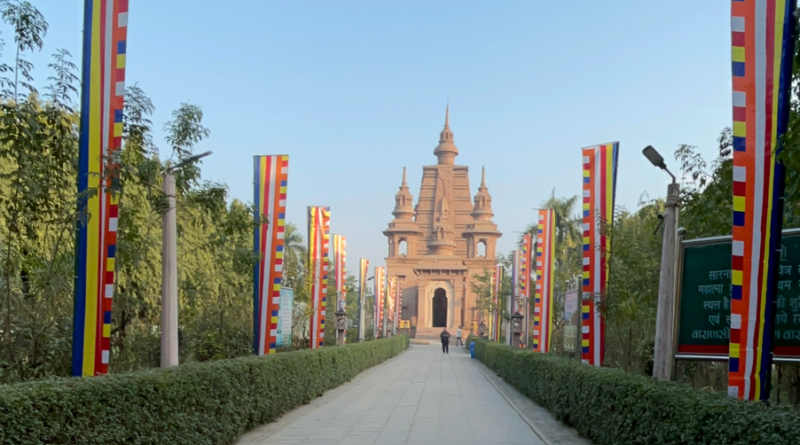
BODH GAYA, India –The Bodh Gaya Temple Management Committee (BTMC) has made identity cards compulsory for Buddhist monks residing in monasteries across Bodh Gaya, asking 81 monasteries to issue identification cards to their monks and submit consolidated lists of their residents. The measure also covers monks visiting the town for extended periods to attend religious ceremonies and meditation programs.
According to a report published by The Times of India on November 23, BTMC secretary-in-charge Paritosh Kumar said the instructions had been sent to monastery heads and the general secretary of the International Buddhist Council in Bodh Gaya. The stated purpose is to establish a systematic record of monks living in the area and verify their identities.
The decision followed a meeting on October 31 concerning the development and management of Bodh Gaya and the Mahabodhi Mahavihara, a UNESCO World Heritage Site. The meeting was chaired by Union Minister Jitan Ram Manjhi and attended by Gaya District Magistrate Shashank Shubhankar, who also chairs the BTMC.
Kumar told the newspaper that the identification system would also help address concerns about individuals wearing Buddhist robes and presenting themselves as monks while approaching pilgrims and tourists for money.
The initiative raises a question that extends beyond Bodh Gaya: how can Buddhist pilgrimage destinations help visitors distinguish genuine members of the Sangha from individuals who may be misrepresenting themselves?
A concern beyond Bodh Gaya
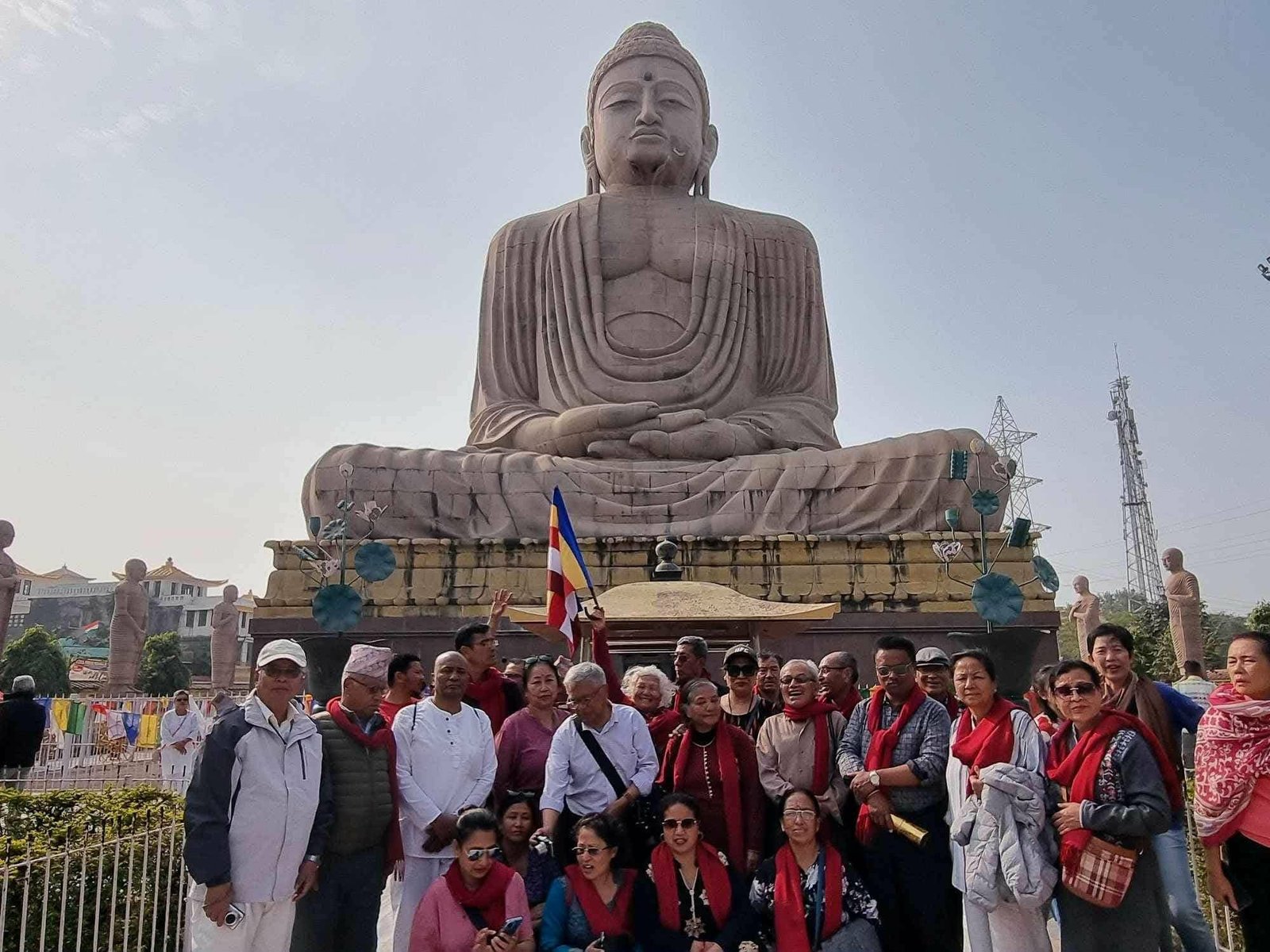
Bodh Gaya, Lumbini, Sarnath, and Kushinagar attract Buddhist pilgrims from across the world. Monks and visitors from different countries and Buddhist traditions gather at these places throughout the year. These destinations are not only important religious sites but also meeting places for diverse Buddhist communities.
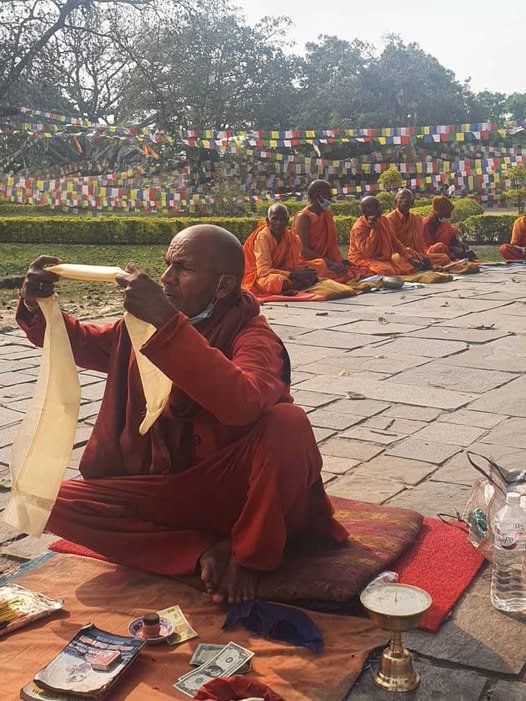
At Lumbini, the birthplace of the Buddha in Nepal, similar concerns deserve attention. During my visits to the Sacred Garden, I have observed individuals wearing clothing resembling Buddhist monastic robes and sitting with blessing strings laid out for distribution to pilgrims. As visitors approach, they offer the strings and invite them to receive a blessing in exchange for a small payment.
Such encounters raise questions about how visitors understand the distinction between a religious offering, a traditional blessing, and an activity carried out by someone whose monastic status is unclear. The concern is not about the exchange of offerings itself, which has a place in Buddhist religious life, but about whether visitors are given a clear understanding of who is offering the blessing and in what capacity.
The Lumbini Development Trust’s visitor guidelines advise visitors not to encourage begging and recommend making donations through designated donation boxes. This indicates that the management of solicitation around the sacred site is already a matter of concern.
A report published by The Kathmandu Post in April 2017 documented complaints about persistent begging around the Maya Devi Temple and other religious sites in Lumbini. According to the report, some visitors felt disturbed by repeated approaches from people asking them for money. It did not establish that those involved were impersonating Buddhist monks, but it documented concerns about solicitation in an important pilgrimage area.
Buddhist monks in several traditions depend on offerings from lay supporters, and the practice of giving alms has a long history in Buddhist communities. Such offerings are part of the relationship between the monastic and lay communities. However, deliberately presenting oneself as an ordained monk without belonging to a recognized monastic community, particularly to obtain money from visitors, is a different matter.
For visitors unfamiliar with Buddhist traditions, distinguishing between an ordained monk and someone simply wearing monastic robes can be difficult. Such encounters may not only confuse visitors about who genuinely represents the Buddhist monastic community but also create a misleading impression of Buddhist monks and their relationship with lay followers. This makes clear identification and reliable information especially important at major pilgrimage destinations.
What does it mean to be a Buddhist monk?
Buddhist monastic traditions have established procedures for ordination and recognition. Theravada, Mahayana, and Vajrayana communities follow different institutional practices and lineages, but monastic identity is not established simply by wearing a particular color or style of robe.
Unlike a profession governed by one international licensing authority, Buddhist monastic communities are organized through different traditions, institutions, and ordination lineages. There is no single worldwide body that registers every Buddhist monk or maintains a universal list of ordained monastics.
In many cases, a monk’s monastic identity can be confirmed through the monastery or community with which the person is affiliated, the relevant ordination lineage, or an established Sangha organization within that tradition. However, the way such confirmation is provided can differ considerably among Buddhist communities.
This creates a practical challenge for pilgrimage authorities. A monastery-issued identity card may help establish a monk’s affiliation and provide a convenient administrative record. However, the card itself should not automatically be treated as independent proof of ordination. The credibility of the system depends on who verifies the information, what standards are used, and whether the relevant religious authorities are involved.
The system must also account for monks who belong to smaller or less centralized communities, as well as those visiting from countries where monastic institutions follow different administrative practices. A process that relies exclusively on one type of institutional documentation could create unnecessary difficulties for legitimate monks.
Bodh Gaya is home to monasteries established by Buddhist communities from numerous countries. Monks arrive from Thailand, Myanmar, Sri Lanka, Japan, Vietnam, Bhutan, Nepal, and elsewhere. Some live there permanently, while others visit for religious ceremonies, meditation retreats, and pilgrimages.
Any identification system must therefore account for both resident and visiting monks. It should recognize the role of monastery authorities and established ordination lineages in confirming a monk’s credentials while allowing reasonable arrangements for visitors who may not have prior registration.
Earlier measures and legal developments
The latest decision is not the first attempt by BTMC to address the issue.
In March 2026, The Times of India reported that the committee had proposed measures to identify individuals posing as monks around the Mahabodhi Temple. These included bar-coded identity cards for genuine monks, cooperation with police and representatives of the International Buddhist Council, and information for visitors about giving offerings through authorized channels.
A separate development came in September 2026, when the Patna High Court issued directions concerning the management of monasteries in Bodh Gaya.
The case involved petitions filed by the Bodh Gaya Hotel Association, which sought action over alleged unauthorized construction and commercial activities in monastery premises. Representatives of the monasteries argued that these institutions serve religious and spiritual purposes and that providing accommodation to monks, pilgrims, and followers is part of their religious activities.
The court dismissed both petitions, finding that the proceedings did not constitute genuine public-interest litigation. However, it directed each monastery to maintain a daily register of people receiving accommodation or residential facilities, including government-issued identification and proof of residence for Indian citizens, and passports and travel or immigration documents for foreign nationals.
The court’s direction concerns accommodation records. It does not establish a process for verifying monastic ordination or determining who is entitled to identify themselves as a Buddhist monk.
Together, these developments reflect growing attention to the management of religious institutions and the movement of people through Bodh Gaya. They also underscore the need to distinguish between administrative measures governing monastery premises and the religious processes through which Buddhist communities recognize members of the Sangha.
Protecting pilgrims and respecting the Sangha
The new identification requirement raises practical questions. How will monasteries verify monks’ credentials, and how will visiting monks from different Buddhist traditions be accommodated? The system must also ensure that personal information is handled responsibly and that genuine monks are not unfairly questioned or restricted.
Bodh Gaya welcomes monks from Buddhist communities around the world, many of whom visit for ceremonies, meditation, and religious gatherings. Developing a workable system will therefore require consultation with monks, monastery administrators, and representatives of different Buddhist traditions. Their involvement can help ensure that the process recognizes the diversity of monastic practices rather than imposing a single administrative standard.
A reliable identification system could help pilgrims distinguish recognized members of the Sangha from individuals who misuse monastic clothing. It could also protect the reputation of Buddhist institutions and the trust visitors place in them. Its success, however, will depend on fair procedures, credible verification, and cooperation between local authorities and Buddhist institutions.
Managing these sacred places involves more than maintaining buildings and visitor facilities. It also means protecting their religious environment and ensuring that pilgrims can visit with confidence. Bodh Gaya’s new measure offers an opportunity to address a broader question: how can monastic identity be verified while respecting the diversity and traditions of the Buddhist Sangha?
Sources
1. Alok Kumar, The Times of India, “BTMC makes ID cards mandatory for Buddhist monks in Bodh Gaya,” November 23, 2026. The Times of India – November 23 announcement
2. The Times of India, “BTMC bid to remove ‘fake monks’ from Mahabodhi temple premises,” March 21, 2026. The Times of India – March 21 report
3. Patna High Court, Bodhgaya Hotel Association v. State of Bihar and Others, September 9, 2026. Patna High Court judgment, September 9, 2026
4. The Kathmandu Post, “Buddha’s birthplace becoming hub of Indian beggars,” April 16, 2017. The Kathmandu Post – Lumbini report, April 16, 2017
5. Lumbini Development Trust, visitor guidelines for the Sacred Garden. Download Greater Lumbini Visitor Guide
6. Harvard Divinity School, “Buddhist Ordination.” Buddhist Ordination — Harvard Divinity School
I’m curious to see how Buddhist leaders answer these questions! With the growing popularity of Buddhist monks here in the USA, it seems to me that some kind of standards would be appropriate here too.