A Mother’s Journey Through the Walk for Peace
Editor’s Note: This reflection is adapted from a personal letter Rose wrote to Ven. Bhikkhu Paññākāra, which she later shared with the Elevate team. We are grateful to Rose for allowing us to share her experience with our readers.
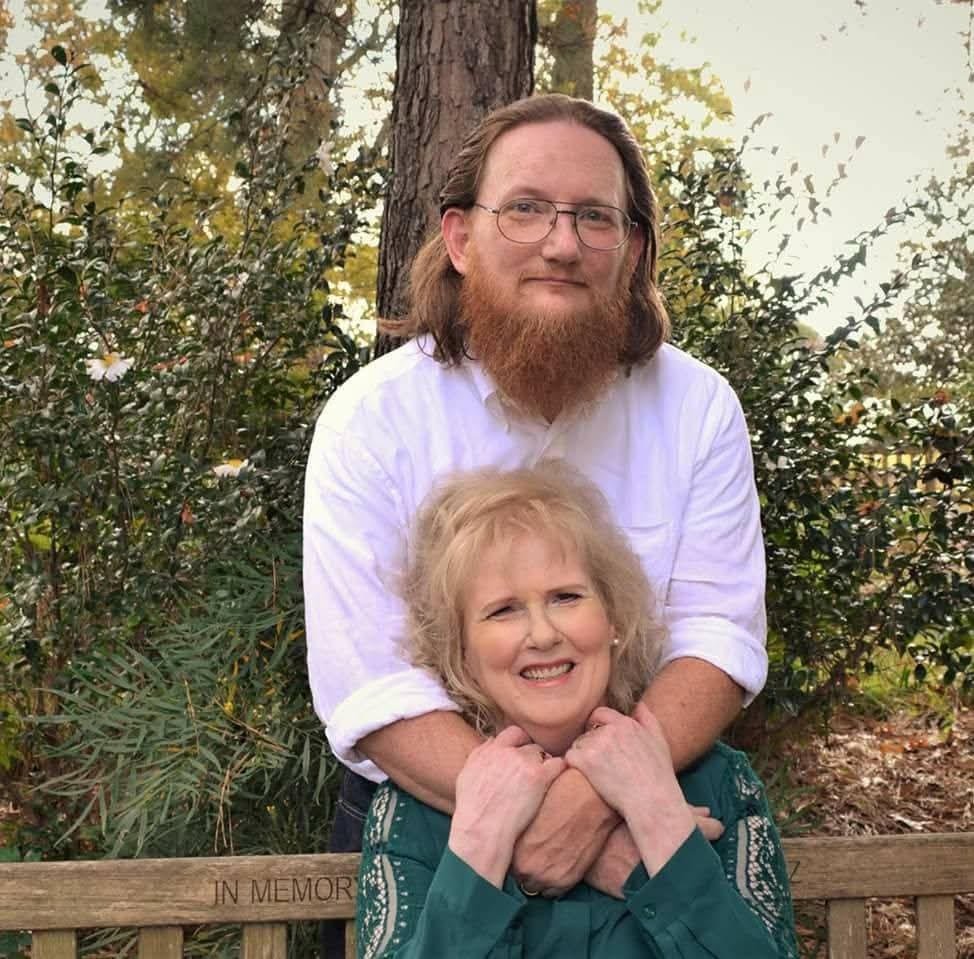
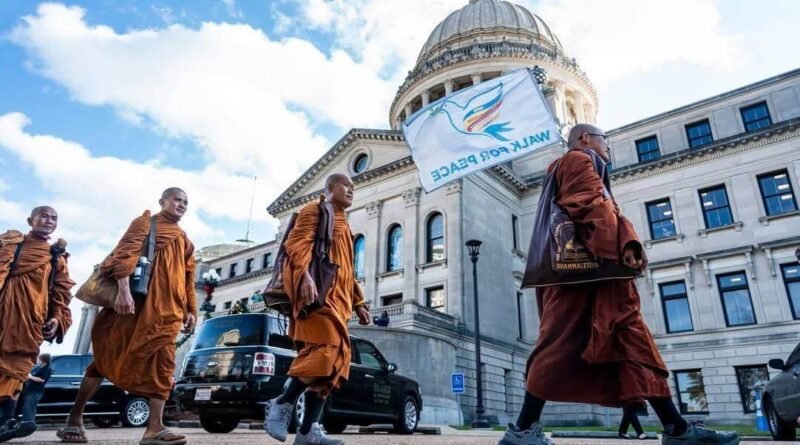
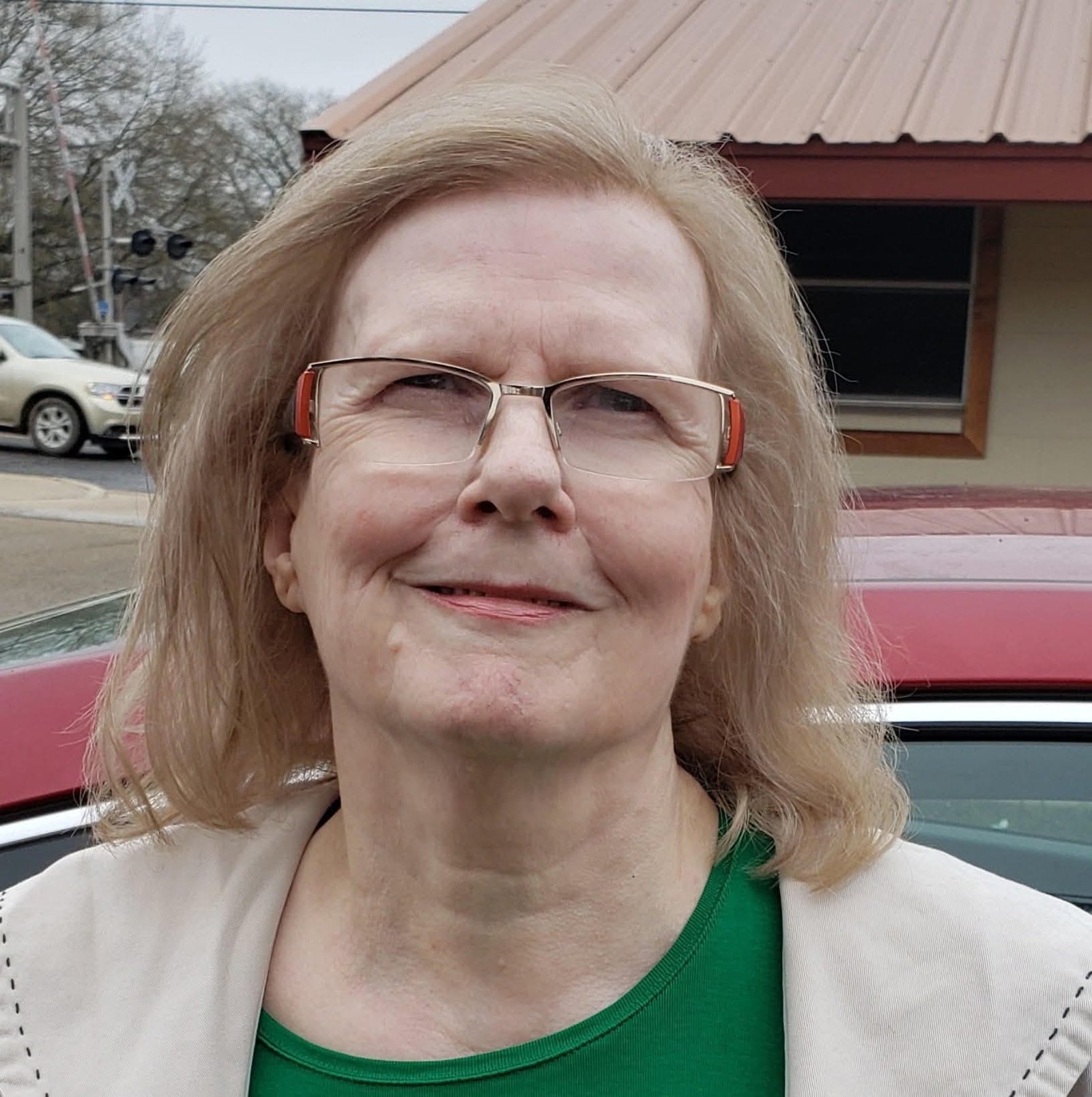
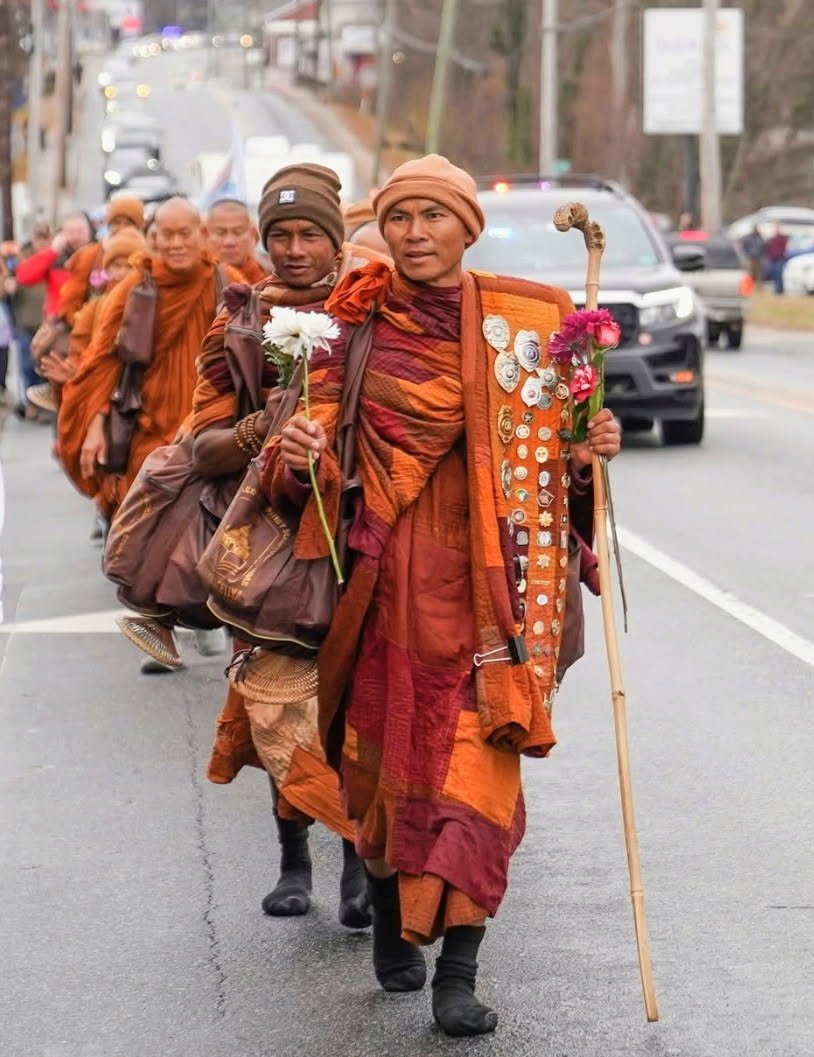
For Rose, the Walk for Peace became something deeply personal. She began following the monks from a distance, but their teachings eventually reached a place in her life where she had been carrying years of grief and pain.
Her search for peace had begun long before the Walk.
In 1972 and 1973, Rose took several classes in Transcendental Meditation. She remembered the peace and clarity she had experienced, but life took her in other directions. After losing her parents in 1978, she began searching again. A chance meeting on a flight with a composer who had studied under the Dalai Lama led to a long and meaningful conversation. She carried that experience with her, but once again, other responsibilities took priority.
One of the deepest sources of pain in Rose’s life was losing her son, Neal. She had helped raise him from the time he was just three and a half years old. When Rose later divorced his father, Neal found it difficult to accept the separation and walked out of her life. They remained apart for 14 years before reconnecting in 2012.
Neal had struggled with drugs and alcohol, but he eventually overcame his drug addiction. His health later began to decline. During the summer of 2023, he called Rose several times. He told her how much her love had meant to him and reassured her that his choices had not been her fault. Rose felt he was trying to make amends.
On October 3, 2023, Rose’s 75th birthday, she received a call from Neal’s workplace in New Mexico. His manager told her that no one had heard from him since September 21. Rose remembered that their last conversation had been on September 18, Neal’s birthday. After she could not reach him, she requested a police welfare check. Neal had died.
There was no opportunity for a proper goodbye. His body was too decomposed for viewing, and his identity had to be confirmed through digital fingerprints before his ashes could be sent to Rose.
The loss left Rose with painful questions. She kept wondering what she might have done differently and even worried about the things left behind in Neal’s apartment, hoping someone might have been able to use his groceries rather than see them thrown away.
Then the nights became especially difficult. Around 3 a.m., the gerbil wheel of thoughts would start racing in her mind: the guilt, the what-ifs, and all the things she wished she had said or done. She would wake up sobbing, sometimes trying not to wake Ken. There was little her husband Ken, whom she had married in 2001, could do except hold her as she cried.
The grief affected her health. Her doctor became concerned that Rose might neglect the medications she needed for her heart and other health conditions. Rose promised that she would take care of herself.
Then, one night, she heard the monks speaking about what she came to call the “key.”
The instruction was simple: when thoughts arise, recognize them, then return attention to the breath at the tip of the nose. Rose wondered whether something so simple could help her troubled mind.
The next time she woke at 3 a.m. with her thoughts overwhelming her, she repeated the instruction to herself: “Thought, thought, thought. Return to the breath at the nose.”
She repeated it four times, holding on to those words like a lifeline in the middle of a turbulent ocean. For the first time in more than two years, she slowly drifted back to sleep.
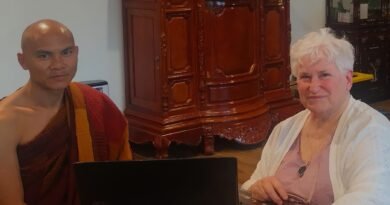
Rose continued listening to the monks’ daily teachings online, especially Ven. Bhikkhu Paññākāra’s explanations of the practice. Each night, when the thoughts returned, she brought her attention back to the breath. Gradually, she needed to repeat the instruction fewer times. By the time the monks returned to Fort Worth, she was repeating it only twice before falling asleep. Eventually, restful sleep returned.
Rose also noticed changes in her health. At a January appointment, there had been no change in her medication. By the end of April, she had reduced her anxiety medication to a third of the earlier dose, under her doctor’s care, and no longer needed her sleeping aid. When she tried to explain the practice to her doctor, the doctor recognized what she was describing as mindfulness and cognitive behavioral change. They also discussed research into the effects of mindfulness meditation on the brain.
Another moment stayed with Rose. During Vesak celebration at Huong Dao Temple, she heard Ven. Bhikkhu Paññākāra offer a blessing for grieving mothers. As she listened, she imagined millions of mothers around the world grieving for their children. In her mind, she saw no differences of culture, religion, education, or background. They were simply mothers crying together, their tears enough to fill a large pond.
For the first time, Rose did not feel alone in her grief. She felt that these mothers were comforting one another through their shared sorrow. A sense of inner peace settled within her.
The Walk for Peace also opened a new path of learning. Rose and Ken began studying Buddhist teachings together. They found recorded talks and introductory courses, including a series on Buddhism by Ven. Bodhi and meditation teachings by Ajahn Brahmali. They began listening to Dhamma talks regularly and discussing what they had heard.
Through the Walk for Peace community, they also made friends with people in other countries who shared learning resources and encouraged them to join online Dhamma talks. A friendship with a follower in Malaysia helped Rose feel more comfortable taking part in temple teachings online. She had once been hesitant to join because she worried about making mistakes or being disrespectful. Her new friend gently encouraged her to listen, learn, and participate at her own pace.
The teachings have also shaped Rose’s hopes for the rest of her life. She has two wishes. First, she hopes to dedicate whatever merits she earns from now until her last breath to her son, Neal, so that wherever he may be reborn, he may feel even a flicker of unconditional love. Second, she hopes to learn enough about the breath to meet the end of this impermanent life with grace, leaving her family with the memory that letting go can be gentle.
Rose knows that she will always carry the love and memory of Neal. She hopes to keep learning about the breath and to dedicate whatever merits she earns to him. Wherever he may be, she wishes that he can feel even a flicker of a mother’s unconditional love.