
When the Walk Ends, the Journey Continues
One Woman’s Mission to Carry the Message of Peace Forward
Story by Ananda Elyce Reeves
Edited and adapted for publication by Elevate Buddhist Journal
A long, long time ago, as a young woman who wore high heels and had a waistline, I was a professional seminar trainer and producer. I produced seminars focused on personal enrichment and inner peace.
I’m an elder now. I no longer wear high heels, and I certainly no longer have the waistline I once had. But I still have it in me to produce dynamic seminars.
After a profound experience watching the Walk for Peace, I decided to gather up my old skills, come out of retirement, and produce peace seminars again. I felt compelled to be of service—to do something significant for all those people who had lined the streets simply to catch a glimpse of hope and peace through the dedicated steps of the monks.
I proposed a follow-up program along the 2,300-mile corridor the monks had traveled—a way to revisit those communities and build on the message that peace is within every one of us. I spent exactly 108 days developing seminars designed to return to the areas along the route.
What surprised me most was that I hadn’t simply rediscovered an old seminar design buried somewhere in my memory. I discovered that I had an entire peace plan waiting to be born: an experiential seminar and a neighborhood-based approach to practicing peace, loving-kindness, and compassion.
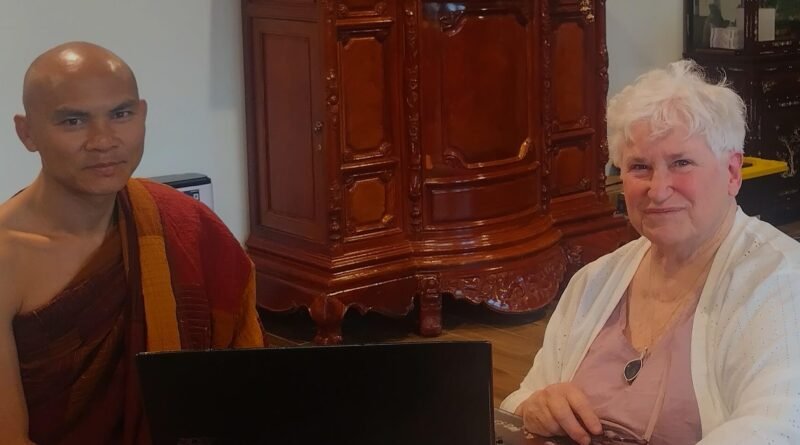
Eventually, I knew I needed to share the idea with the monks at Huong Dao Temple. I wanted to present my work personally to Bhikkhu Pannakara and, of course, Aloka.
The Journey to Fort Worth
After many days of preparation, the time finally felt right.
I decided to travel from Eugene, Oregon, to Fort Worth, Texas, to present the program in person. Somehow the money appeared, the time opened up, and I knew that Bhikkhu Pannakara would be at the temple. There was only one problem: I couldn’t secure a specific appointment.
The temple had just packed away 24,000 candles following Vesak, and Bhikkhu Pannakara had been in Canada preparing for a trip to Thailand. Still, I decided to go.
I took a two-day train journey from Eugene to Fort Worth. Traveling that distance as an amputee was challenging, but I had already decided that nothing was going to stop me.
After arriving in Fort Worth, I took a city bus to my hotel, about four miles from the temple. I called Chin Le, my contact at the temple, and let him know that I had arrived safely.
Then the phone rang. Nun Nanika, a spokesperson for Bhikkhu Pannakara, told me that he would see me that evening at 6:00.
I was thrilled. I looked at the clock on my computer and thought I had a couple of hours to polish my presentation. Then she called again.
“Are you coming?”
“Yes, at 6:00.”
“It’s 6:00 now.”
I suddenly realized that my computer was still set to Pacific Time. I was already late. I called an Uber and hurried toward the temple. Before leaving, I told the driver that this was the most important meeting of my life. I explained that I was going to meet Bhikkhu Pannakara and present my proposal for bringing peace seminars to the communities along the route of the Walk for Peace.
She became excited about the meeting—and apparently sensed how nervous I was. Then, as we drove, she began singing “Let Peace Begin with Me,” my favorite peace song. What are the chances of that?
A Wheelchair at Just the Right Moment
When we arrived at the temple, Chin Le was waiting in a golf cart. With some help, I transferred from the Uber into the cart. Then something unexpected happened. A monk appeared with a wheelchair.
They had discovered it earlier while cleaning out Aloka’s room. No one had known it was there. The timing was perfect. “I guess you could say Aloka found me a wheelchair.”
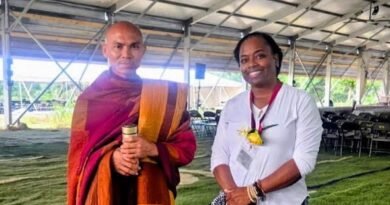
They wheeled me into the meeting room, where I met Bhikkhu Pannakara. A few moments later, Aloka joined us and settled down nearby. I was ready to begin my presentation when my computer decided it was the perfect moment to install an update.
While we waited, Pannakara and I talked. He listened as I explained what had brought me there. Then the presentation began. Slide by slide, I explained the program and how I envisioned bringing peace training into neighborhoods along the route. I was nervous, but once I began speaking, I was able to focus completely.
The most profound part of the experience was not simply presenting my proposal. It was being listened to. I experienced Pannakara’s attention as deeply still and peaceful. He listened carefully, without rushing me. For me, that experience became part of the teaching itself. When people feel listened to, they feel peace. When I finished the presentation, he asked: “What do you need from me?”
Perhaps he expected me to ask for the involvement of the temple or the monks. But my program had been designed to require neither their time nor their resources. It was intended as a self-contained system that people could practice at the neighborhood level through peace, loving-kindness, and compassion.
So I told him: “We only want your blessings.” I explained that the program was designed to respect his monastic life and allow the monks to remain focused on their practice while encouraging communities to cultivate peace and unity themselves.
When he heard my answer, he was deeply touched. He said: “You have my blessings.”
Those words made the long journey—and every minute I had spent developing the program—worthwhile. They gave me exactly the courage I needed to continue.
The Gift of Silence
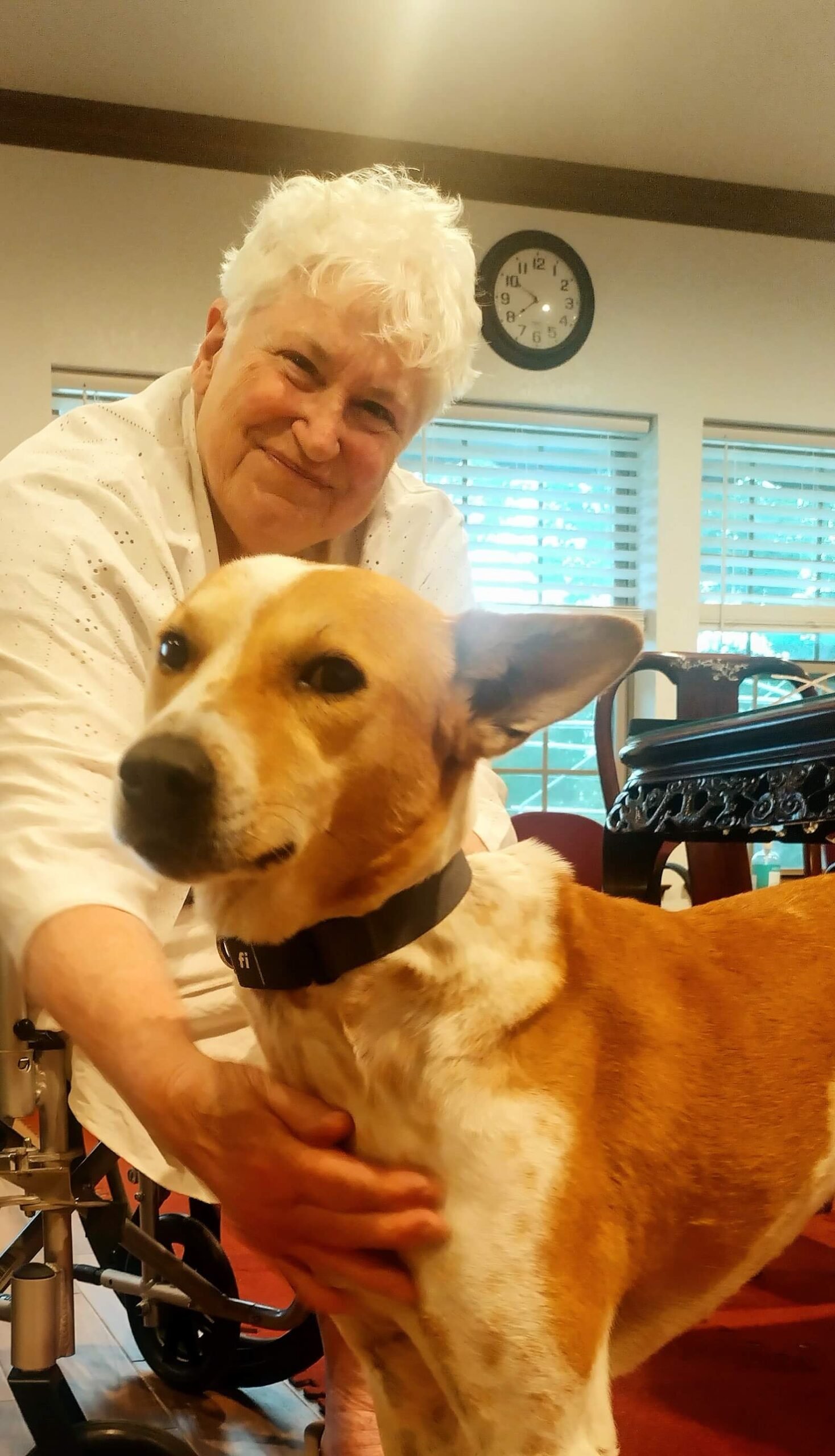
After the presentation, Aloka woke from his nap, stretched, and came over as though he expected a photo session. We took some photographs, and then the room became quiet again. There was nothing more that needed to be said. We simply sat together in silence.
I later noticed a public bus passing along the main road and asked which route it was. That discovery made it possible for me to return to the temple by public transportation over the next five days, even with my heavy powerchair.
I spent time in the gardens, near the ponds and statues, taking in the peaceful surroundings and reflecting on what had happened. I had arrived with an idea. I was leaving with renewed courage.
One day, as my powerchair battery was running low, I met Sherry Ryker, who asked if she could help. I asked whether there was somewhere I could plug in my chair. She led me inside the temple, where I was able to charge it. For more than an hour, I had the place almost entirely to myself. It was a precious gift.
The temple gave me the opportunity to quiet my mind. In that silence, I began to see more clearly what I needed to do next: create a way for people along the route to receive the message of peace and turn it into something they could practice right where they lived. I stayed for a chant and Dharma talk before catching the last bus back to my motel. It felt perfect.
A New Name, A New Beginning
After my visit and presentation, I received an email from the office of Bhikkhu Pannakara. I was told that my proposal had been shared with the monastery leadership.
The message was encouraging: they supported the idea of neighborhood peacemaking. At the same time, I was asked to respect the monastery’s rules regarding the use of its name, official photographs, and other copyrighted material associated with the Walk for Peace.
I fully respected the request. In fact, it gave me an unexpected sense of freedom.
I removed the copyrighted material and renamed my seminars “Rolling Peace Gatherings.” I began building a website and developing a system that could work in the neighborhoods along the route independently. The inspiration had come from the Walk for Peace, but the work ahead would be my own responsibility.
I am now preparing to launch the program.
I’m 77 years old. I don’t wear high heels anymore, and I don’t have the waistline I once had. I move through the world with a prosthetic leg and a powerchair. But I still have work to do. I am dedicating the rest of my life to traveling along this route and bringing peace seminars and community-organizing skills to the neighborhoods I visit.
The monks walked thousands of miles and brought a message of peace to communities along the way. Their journey awakened something in me. Now I want to carry that inspiration forward—not by walking the same path, but by helping people discover how peace can begin where they already are.
The Walk may have ended, but for me, the journey continues.
What a stunning story and I’m actually questioning myself as to why I too have not come up with activities to do in a non Walk For Peace Market which is Phoenix Arizona. I would like to be introduced to this amazing woman to see if she had an outline I could adapt for our city.
What a great idea! Thanks for sharing your story and your project, Ananda Elyce Reeves!
What a beautiful and inspiring story, Ananda. It brought tears. Sadhu Sadhu Sadhu.
Interesting…I live just a short drive from Eugene. I have been witnessing a great need for a more peaceful community in my small town. Opposite political sides screaming at each other on street corners is counter productive. Straight up rude and hateful postings on neighborhood Facebook pages is out of control. There’s such a better life out there if we can all sit down together.
I would love to contact this woman and see if there is some way I could support her and this work. Please advise❤️☮️🙏🏼🐾
This is absolutely wonderful. I am joining the other voices here in saying I would love to help her in some way. I am in South Carolina. My career was working in the film industry. There has to be some way I can contribute to her peace journey.
You are amazing Ananda 🤗