
Learning to Walk in Peace
A Reflection on the Walk for Peace
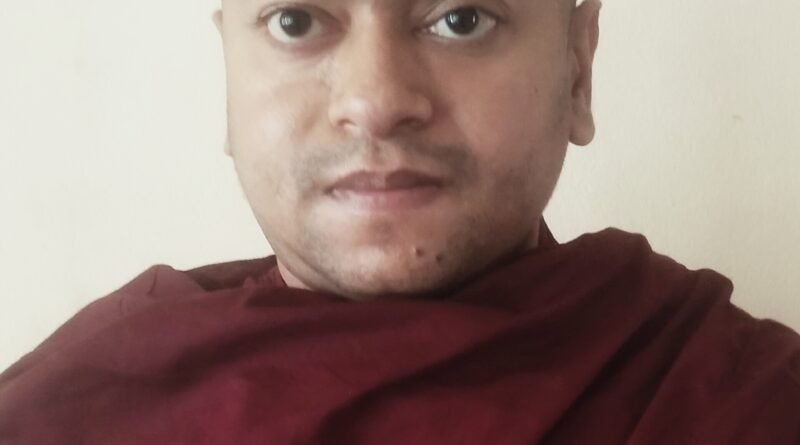
Ahsan Islam — Bangladesh
My name is Ahsan Islam, and since 2014 I have been studying religion in search of truth, inner peace, and a path toward liberation. I first studied Islam, followed by Judaism, Christianity, and Sanātana Dharma. Later, I began studying Buddhism, particularly the Buddha’s teachings on suffering, liberation, mindfulness, and meditation.
Through Vipassanā and other forms of meditation, I experienced a sense of calm and inner peace that had previously been absent from my life. This experience inspired me to study Buddhism more deeply and to pursue the monastic path.
In November 2025, I left my home with the intention of entering monastic life. Since then, I have stayed at several monasteries in Bangladesh, including monasteries in forest and hilly areas, where I studied Buddhist teachings and monastic practices. I have also undertaken śrāmaṇa ordination on several occasions and gained experience in monastic discipline, meditation, daily Buddhist practices, and the life of a renunciant.
My sincere aspiration is to continue my training under qualified teachers and, if accepted by a suitable monastery, eventually undertake full bhikkhu ordination. Several monastics and teachers have advised me to continue my training in Sri Lanka or Thailand.
It was during this period of seeking and practicing the Dhamma that I encountered the Walk for Peace.
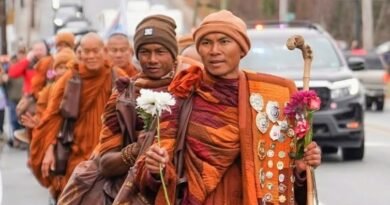
In a world where we constantly see images of war, division, fear, and suffering, the sight of Buddhist monks walking peacefully touched me in a very different way. They were not demanding anything from the world. They were simply walking—slowly, mindfully, and with a message of peace.
What affected me most was the contrast between their quiet footsteps and the noise of the world around them. In an age when people often try to make themselves heard by shouting louder than others, these monks seemed to show that peace does not need to be loud.
Watching their journey through photographs, videos, and social media made me reflect on my own understanding of peace. I began to realize that peace is not only something we expect from governments or from other people. It must also begin in the individual mind. If anger, hatred, greed, and intolerance remain within us, it becomes difficult to create genuine peace outside ourselves.
The monks’ willingness to continue despite physical hardship made this message even more meaningful to me. Their journey reminded me that peace is not simply a beautiful idea. It requires patience, discipline, endurance, and compassion.
I was also touched by the way people from different backgrounds welcomed them. For those moments, religious and social differences seemed less important than a shared human wish: to be happy and to be free from suffering.
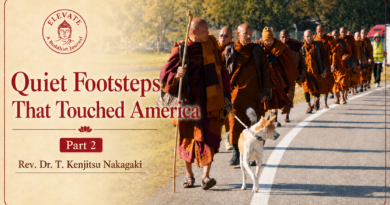
The presence of Aloka, the dog travelling with the monks, gave me another perspective. It reminded me that compassion should not stop at the boundaries of human beings. A peaceful world should include care for all living beings.
For me, the Walk for Peace became more than something I watched on a screen. It became an invitation to examine my own life. I began asking myself whether my words create peace or conflict, whether my reactions come from understanding or anger, and whether I am actually practicing the values that I admire in others.
I may never walk thousands of miles for peace. But I can begin with smaller steps: speaking with kindness, controlling anger, listening more carefully, and cultivating compassion.
Perhaps that is what the Walk taught me most deeply: Peace is not only a destination we walk toward. Peace is the way we learn to walk.
This speaks to me of being a contemplative in action. Along with being a “renunciate” and making peace the focus of the walk (rather than the destination), there’s also the focus on helping others: “A peaceful world should include care for all living beings.” Thanks for sharing!