
AI Meets Dharma: “Buddharoid” Robot Monk Sparks Global Discussion on the Future of Buddhist Practice

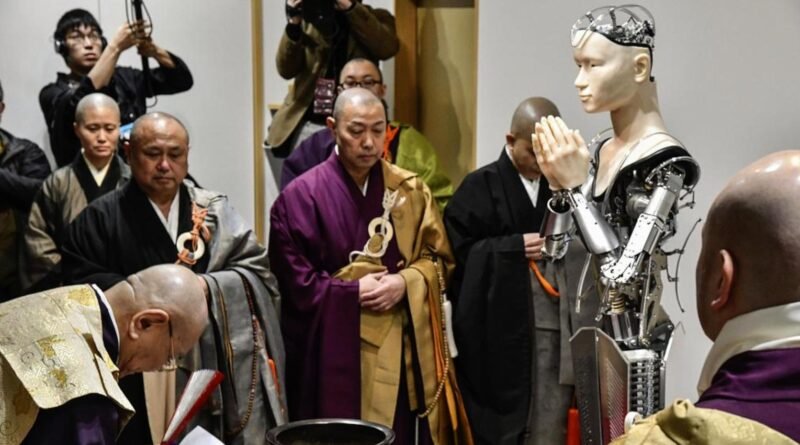
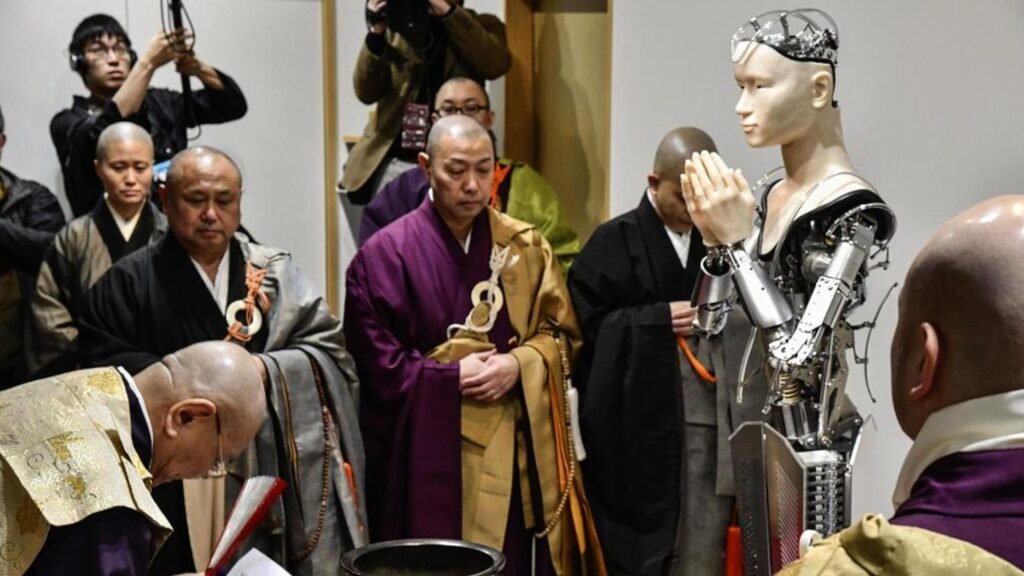
Kyoto, Japan: A groundbreaking development at Kyoto University has introduced a new dimension to the intersection of technology and spirituality. Researchers led by Seiji Kumagai have unveiled “Buddharoid,” an AI-powered humanoid robot monk designed to provide spiritual guidance, engage in philosophical dialogue, and assist in temple activities.
Debuting in early 2026, Buddharoid has been trained on centuries of Buddhist scriptures, including complex and esoteric texts, enabling it to respond to deeply personal and doctrinal questions. The robot is capable of lifelike gestures, voice interaction, and traditional prayer postures—creating a presence intended to resemble that of a human monastic practitioner.
Addressing a Changing Religious Landscape
The development emerges in response to Japan’s aging population and a declining number of Buddhist clergy. With fewer monks available to sustain temple activities and guide lay communities, Buddharoid is being explored as a supplementary presence—particularly in rural or underserved areas.
Unlike earlier religious robots, which were largely scripted, Buddharoid utilizes advanced artificial intelligence to conduct dynamic, two-way conversations. During a recent temple demonstration, it interacted directly with attendees, offering individualized responses to spiritual and existential inquiries.
Key Capabilities
- Scriptural Depth: Trained on extensive Buddhist canonical and commentarial literature
- Conversational Intelligence: Engages in adaptive dialogue rather than pre-set sermons
- Embodied Presence: Walks, gestures, and adopts ritual postures within temple environments
- Functional Role: Intended to assist in rituals and provide guidance where clergy are limited
Part of a Growing Trend
Buddharoid is not the first attempt to merge robotics with Buddhist expression. Japan has previously seen the introduction of Mindar, a highly sophisticated android inspired by the Bodhisattva Kannon at Kyoto’s Kodaiji Temple, as well as “Xian’er,” a robot monk developed in China to share Buddhist teachings.
However, Buddharoid’s ability to engage in real-time dialogue marks a significant evolution in this emerging field.
Emerging Discussions Within the Buddhist Community
The introduction of Buddharoid has prompted wide-ranging discussions among monastics, scholars, and lay practitioners worldwide. Several key themes have emerged:
1. Can AI Convey Authentic Dharma?
A central question is whether an artificial system—no matter how advanced—can truly embody and transmit the Dharma. While Buddharoid can process and articulate scriptural knowledge, many argue that realization in Buddhism is rooted in lived experience, ethical discipline, and meditative insight—qualities not easily replicated by machines.
2. The Role of Compassion and Intention
Buddhist teaching places strong emphasis on intention (cetana) and compassion. Critics question whether AI-generated responses, however sophisticated, can genuinely reflect compassion or whether they remain simulations of empathy without inner awareness.
3. Skillful Means (Upāya) in a Modern Context
Others view Buddharoid through the lens of skillful means—the idea that the Dharma can be communicated in forms appropriate to time and context. From this perspective, AI may serve as a contemporary tool to introduce teachings, especially to younger or technologically engaged audiences.
4. Ritual Authenticity and Monastic Identity
The potential use of robots in performing or assisting rituals raises concerns about authenticity. Traditional Buddhist rituals are not merely procedural but are embedded in lineage, ordination, and communal trust. The presence of a robot monk challenges long-standing notions of what constitutes a legitimate religious authority.
5. Ethical and Social Implications
There are also broader concerns regarding over-reliance on technology in spiritual life. Some fear that automation may weaken human relationships within sangha communities, while others see it as a necessary adaptation to demographic realities.
Implications for the Future of Buddhism
Buddharoid represents more than a technological innovation—it signals a turning point in how religious traditions may evolve in the face of societal change. Its development suggests several possible implications:
Supplement, Not Replacement: AI may serve as an educational and supportive tool rather than a substitute for human monks
Expanded Accessibility: Remote or underserved communities could gain greater access to teachings
Digital Preservation of Texts: Advanced AI systems may help preserve, interpret, and disseminate complex scriptures
Re-examination of Authority: The role of teachers, lineage, and realization may be more clearly defined in contrast to AI systems
A Moment for Reflection
As Buddharoid begins its journey within temple spaces, it invites both curiosity and careful reflection. The encounter between ancient wisdom and modern technology raises profound questions about the nature of understanding, presence, and awakening.
While the robot may speak the words of the Buddha, the broader conversation it has sparked may ultimately prove to be its most significant contribution—encouraging the global Buddhist community to reflect deeply on how the Dharma is preserved, practiced, and transmitted in an increasingly digital world.
By Elevate News Desk