
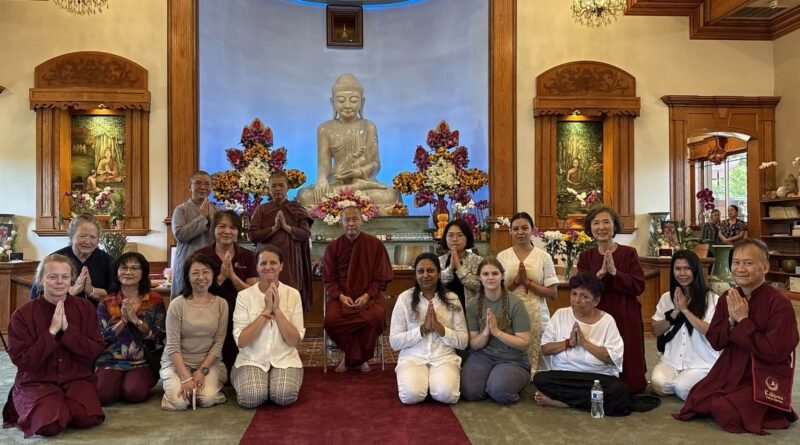
The Importance of the Eightfold Uposatha Vow
By Sumati Bajracharya

In Buddhist philosophy, the observance of the Eightfold Uposatha Vow, commonly known as the Eight Precepts, holds profound spiritual and ethical significance. Before engaging in meditation practices, Vipassanā, yogic disciplines, or higher Vajrayāna practices, Buddhist teachings emphasize that monks, nuns, lay followers, and practitioners of Theravāda, Mahāyāna and Vajrayāna traditions should firmly establish themselves in moral discipline through the observance of the Eightfold Uposatha vow. This demonstrates that ethical conduct and self-restraint form the indispensable foundation of spiritual cultivation.
The practice of sacred vows and fasting disciplines exists in many religious traditions. Christian, Hindu, Jain, Sikh and Muslim communities all observe forms of fasting and ethical restraint. Yet the Buddhist Eightfold Uposatha is distinctive in its embodiment of the Middle Path — avoiding both indulgence and extreme asceticism. This balanced approach remains one of the defining characteristics of Buddhist teaching.
The Eightfold Uposatha consists of eight ethical commitments intended to purify body, speech, and mind while strengthening mindfulness, concentration, and self-discipline. The Buddha classified these observances into three broad categories: moral discipline, vigilance, and vow observance.
The Eightfold Uposatha includes refraining from:
- Killing living beings
- Taking what is not freely given
- Sexual misconduct and sensual indulgence
- False speech
- Intoxicants and alcohol
- Entertainment, dancing, singing, perfumes, garlands, and adornments
- Luxurious or elevated beds and seats
- Eating at improper times, especially after midday
The Buddha placed great emphasis on moderation in food and awareness in eating habits. Excessive indulgence weakens both body and mind, whereas disciplined eating supports meditation, mindfulness, concentration, and spiritual realization. Refraining from untimely eating was therefore not merely ritualistic, but a practical method for cultivating calmness, clarity, physical well-being, and mental stability.
For this reason, the observance of the Eightfold Uposatha has remained highly important not only in the Theravāda tradition but also among Mahāyāna and Vajrayāna practitioners. It is regarded as a discipline that nourishes merit, preserves virtue, and strengthens wholesome states of mind.
The observance of Eightfold Uposatha has long been associated with the purification of negative karma and relief from suffering. Traditional Buddhist narratives recount how Devadatta and King Ajātaśatru, both burdened by grave misdeeds, experienced transformation and relief through the compassionate guidance of the Buddha and the observance of Eightfold Uposatha vows. Because of such traditions, Eightfold Uposatha has historically been regarded not only as a spiritual discipline but also as beneficial for physical and mental well-being.
Even modern medical practices such as intermittent fasting resemble aspects of the Buddhist discipline of regulated eating. Contemporary physicians frequently recommend controlled fasting for conditions such as diabetes, reflecting insights that parallel ancient Buddhist understandings of moderation and health.
The Eightfold Uposatha also occupies a central place within Vajrayāna initiation practices. According to the Hevajra Tantra, a disciple seeking tantric initiation must first be grounded in the observance of the Eightfold Uposatha and then the Ten Precepts. Only afterward should the disciple gradually study the philosophical systems of Vaibhāṣika, Sautrāntika, Yogācāra, and Madhyamaka before entering the Mantrayāna or Vajrayāna path.
The Hevajra Tantra states:
Poṣadhaṁ dīyate prathamaṁ tadanu śikṣāpadaṁ daśaḥ।
Vaibhāṣyaṁ tatra deśeta sūtrāntaṁ vai punaḥ tathā।।
Yogācāraṁ tata paścāt tadanu mādhyamakaṁ diśet।
Sarva mantranayaṁ jñātvā tato hevajram ārabhet।।
Gṛhṇīyāt sādaraṁ śiṣyaṁ siddhyante nātra saṁśayaḥ।
Translation:
“First, one should be established in the Uposatha vow. Then one should undertake the Ten Precepts. Thereafter, the teachings of the Vaibhāṣika and Sūtrānta traditions should be explained. Next, the teachings of Yogācāra and then Madhyamaka should be taught. Having understood all the methods of Mantrayāna, one may then begin the Hevajra practice. The disciple should be accepted with respect and care. If this is done properly, accomplishment is certain — there is no doubt.”
This teaching makes clear that proper initiation must be grounded in the ethical discipline of the Eightfold Uposatha and supported by gradual training in Buddhist philosophy, moral conduct, and mental cultivation. A true teacher must guide disciples with humility, patience, compassion, and understanding rather than turning spiritual instruction into a matter of pride, prestige, or public display. Large-scale initiation ceremonies are sometimes conducted without sufficient ethical preparation or understanding of discipline. The tendency to treat initiation as a public spectacle or symbolic formality risks weakening the profound spiritual purpose emphasized in Vajrayāna teachings. Genuine initiation requires disciplined preparation, ethical conduct, mutual trust, and sincere commitment from both teacher and disciple.
Although contemporary circumstances have changed, the deeper purpose of the Eightfold Uposatha remains timeless. Rather than focusing merely on increasing the number of initiates, Buddhist communities should place greater emphasis on cultivating genuine ethical discipline, mindfulness, compassion, and the spirit of Bodhisattva conduct.
The Ten Virtuous Actions (Daśa Kuśala Karma), closely associated with the practice of the Ten Precepts, are:
- Refraining from killing
- Refraining from stealing
- Refraining from sexual misconduct
- Refraining from false speech
- Refraining from divisive speech
- Refraining from harsh speech
- Refraining from idle or meaningless talk
- Refraining from greed
- Refraining from ill will
- Refraining from wrong views
May all beings be blessed with peace, wisdom, and auspiciousness.
References
- Hevajra Tantra
- Vimalaprabhā Commentary on the Kālacakra Tantra
- Jātaka Tales
- Traditional Newar Buddhist Vajrayāna practices and oral teachings