Winning with Wisdom: Mindfulness, Sportsmanship, and Cultural Values
In an age marked by rapid technological advancement, intense competition, and increasing social complexity, the cultivation of strong character and ethical responsibility has become more important than ever. While discussions about national development often focus on economic growth, political stability, and technological innovation, the roles of sports and cultural values are sometimes overlooked. Yet these two pillars profoundly influence how individuals think, behave, and relate to one another.
Sports teach discipline, teamwork, perseverance, and the ability to face both success and failure with dignity. Cultural values, meanwhile, nurture respect, compassion, hospitality, and a sense of social responsibility. When guided by mindfulness, both become powerful tools for personal growth and collective well-being. Mindfulness helps individuals develop self-awareness, emotional balance, and ethical sensitivity, enabling them to respond wisely to life’s challenges and opportunities.
In this article we will explore how mindfulness enriches sports and cultural values, transforming them into pathways for cultivating responsible citizens, harmonious communities, and ultimately a mindfully empowered nation.
Although sports and cultural values may not always dominate economic and political discussions, they play a crucial role in shaping society and are deeply interwoven with our daily lives. Originally, the Olympic Games and other organized sports were established to promote peace, foster connections, and strengthen harmony among nations.
However, in today’s world, we often witness a shift away from these ideals. We observe how some individuals react when they are losing—they lose their temper, engage in conflict, and struggle to accept defeat gracefully. Everyone wishes to win. While this desire can be a powerful motivation, an excessive attachment to victory is neither natural nor conducive to true sportsmanship.
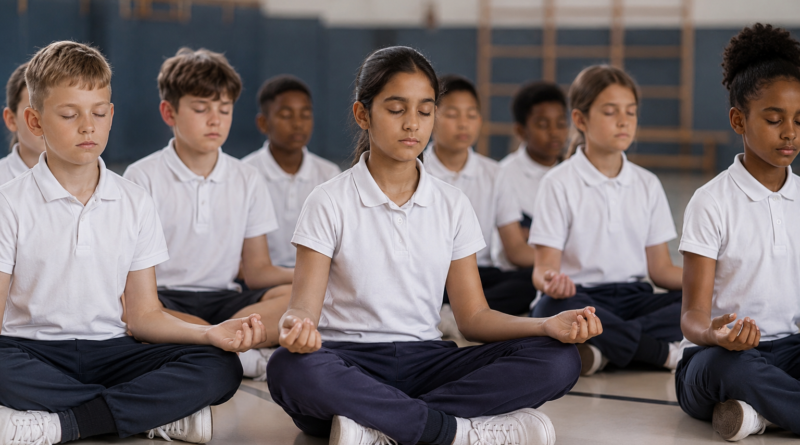
When sports are approached with mindfulness, participants learn to accept both victory and defeat with equanimity. Such an even-minded attitude represents the highest form of sportsmanship, and sports serve as a valuable tool for cultivating it. Mindfulness acts as an inner observer, allowing individuals, teams, and even nations to assess their preparedness to embrace both success and failure.
Success in sports requires both individual and team preparedness, supported by a balanced mindset. Mere participation alone is not enough to secure victory. This preparedness parallels the qualities developed through mindfulness. The common approach in sports is an intense desire to win every game, which often leads to tension and anxiety. However, if one approaches competition with evenly suspended attention and an equanimous mind, one can perform in a balanced and effective manner.
A girls’ hockey team from a school known to me was preparing for its first competitive tournament. Historically, the team had never achieved significant success. Remarkably, during their first series of games, they managed to win. One of the teachers, who were also a mindfulness practitioner, observed their approach and later interviewed the players. The team members noted that their opponents struggled with communication and coordination while passing the ball. In contrast, the winning team, whose members regularly practiced mindfulness, communicated clearly and worked together effectively.
This example demonstrates that mindfulness is not primarily about winning or losing. Rather, it enables individuals to perform at their best throughout the game. When one possesses the right mindset, performance naturally improves.
The same principle applies to our daily lives and cultural values. As a national characteristic, particularly in Sri Lanka, there exists a rich tradition of hospitality. Treating and assisting visitors is regarded as a valued practice and an important cultural feature. This quality is naturally ingrained in Sri Lankan society and is widely recognized internationally.
Whenever we welcome visitors, genuine cultural values should take precedence over personal gain or financial considerations. In a mindfulness-based Buddhist culture, hospitality is offered through the qualities of moral shame and moral fear. When these qualities are supported by mindfulness, individuals develop the emotional intelligence necessary to recognize and respond to the needs of others. Empathy flourishes naturally, and visitors—whether foreign or local—are treated as members of one’s own family.
Without moral shame and moral fear, cultural values gradually deteriorate. Therefore, mindfulness has a direct relationship with a person’s emotional and moral responsibility. This is because mindfulness and clear comprehension—the wisdom that develops through practice—serve as the foundation for cultivating moral shame and moral fear.
Moral and emotional responsibilities are of profound cultural values. Without them, there is a tendency to prioritize financial gain or other forms of personal benefit. While such approaches may produce immediate results, they often misrepresent and undermine rich cultural traditions.
Therefore, we must teach younger generations the importance of both cultural values and sports. While society may generally understand mindfulness, it is rarely integrated into the teaching of ethical responsibility. For this to change, adults—especially parents and teachers—must first understand and embody these values themselves. Their behavior serves as a “silent sermon,” often far more influential than lectures or theoretical instruction.
In both sports and cultural life, students and teachers stand on equal ground. Likewise, when competing against another team or individual, all participants share the same platform. We must maintain the intention to respect and protect the ethical rights of others. It is important not to focus solely on winning but rather on performing and competing to the best of one’s ability.
Mindful games and activities are introduced primarily to cultivate vigilance and diligence, not merely to achieve victory. Through such practices, individuals can develop greater awareness, discipline, and perseverance. As a result, when interacting with others or competing with another team, they can foster deeper understanding, peace, and harmony.
These qualities form the foundation upon which the character of young people is built. If we focus exclusively on academic achievement while neglecting sports and cultural values, we may encounter significant challenges—especially in a rapidly evolving world filled with advanced technology and endless entertainment options.
Without learning how to accept loss and defeat, remain grounded, and embrace cultural values, individuals become more vulnerable to life’s inevitable challenges. In such situations, there may be no external advisory body or protective mechanism capable of shielding them from these natural experiences.
With persistent practice, mindfulness naturally becomes integrated into sports, multicultural interactions, and many unexpected situations in life. Over time, mindfulness reveals itself as a powerful “superglue” that binds together sports, culture, and ethical values.
As we reflect on today’s topic, I hope you are inspired to embrace both sports and cultural heritage with discipline, mindfulness, and moral responsibility. Our ultimate goal should be to cultivate these qualities on a national level and work toward becoming a truly “Mindfully Empowered Nation.”
By Venerable Udairiyagama Dhammajiva Maha Thero
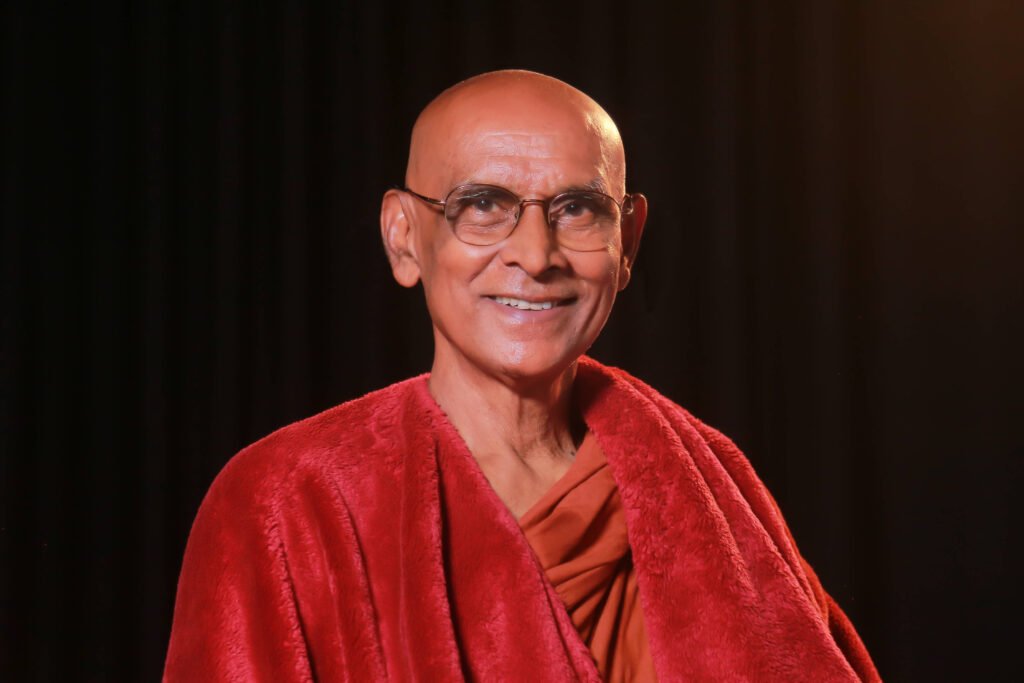
Author venerable Udairiyagama Dhammajiva Maha Thero is the Chief Preceptor and Abbot of the Mitirigala Nissarana Vanaya, one of Sri Lanka’s most renowned and respected forest monasteries. He has instructed and guided 600+ monks and 30,000+ lay people in during different mindfulness retreats. He is widely recognized as a meditation master with the distinctive ability to guide beginners and advanced practitioners in both secular and religious settings through the development of mindfulness to its peak.