Walk for Peace Monks Begin Thailand Program with Ven. Bhikkhu Paññākāra
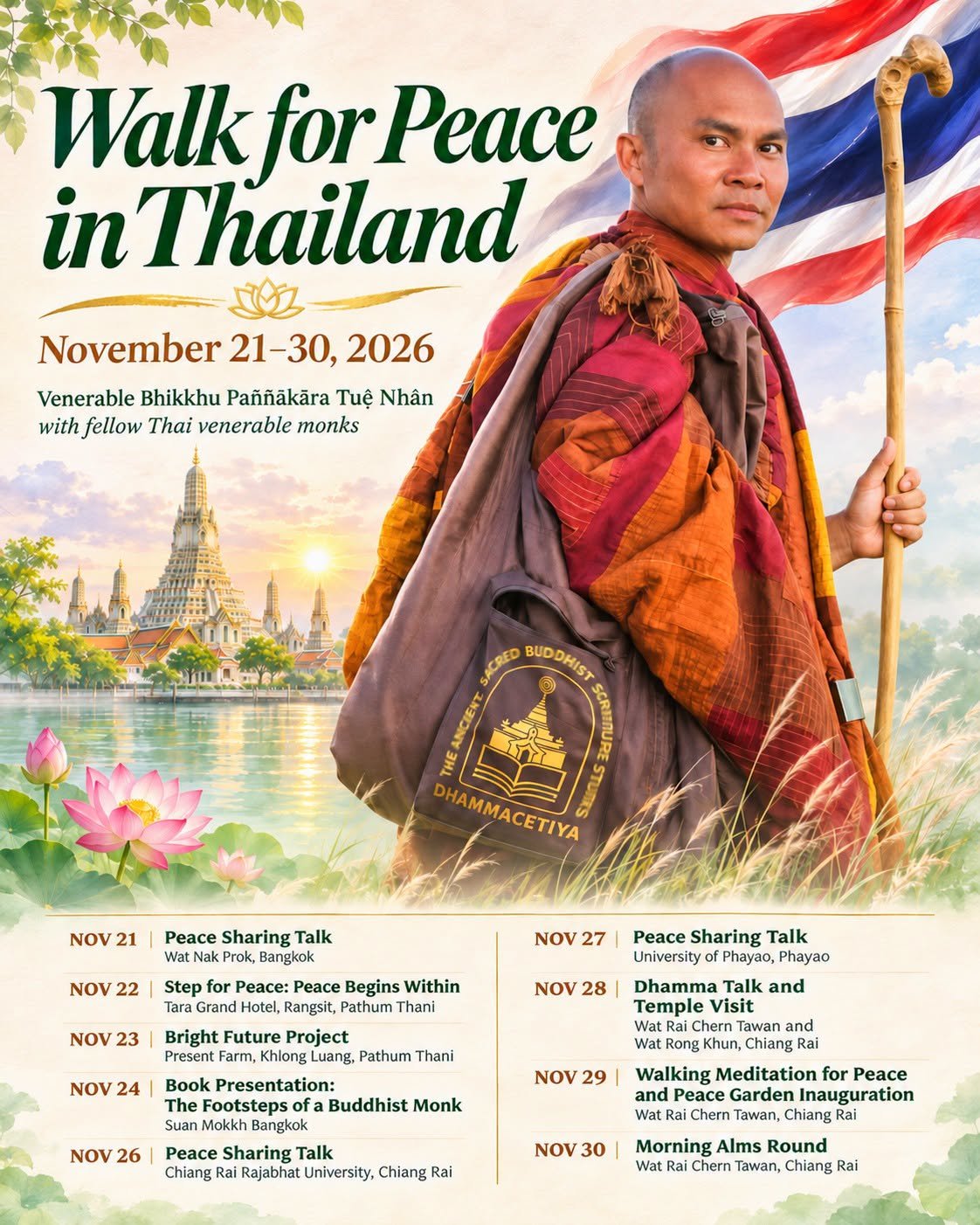
BANGKOK, Thailand Venerable Bhikkhu Paññākāra Tuệ Nhân and fellow Thai monks who participated in the Walk for Peace have begun a series of peace activities across Thailand from November 21–30, 2026.
The ten-day program includes public talks, walking meditation, educational activities, temple visits, and community gatherings in Bangkok, Pathum Thani, Chiang Rai, and Phayao.
The program opened on November 21 with a Peace Sharing Talk at Wat Nak Prok in Bangkok. Other scheduled activities include Step for Peace: Peace Begins Within at Tara Grand Hotel in Rangsit on November 22 and the Bright Future Project at Present Farm in Pathum Thani on November 23.
On November 24, the monks will participate in a presentation of the book The Footsteps of a Buddhist Monk at the Buddhadasa Indapanno Archives (Suan Mokkh Bangkok).
The program then moves to northern Thailand, with peace talks scheduled at Chiang Rai Rajabhat University on November 26 and the University of Phayao on November 27.
In Chiang Rai, the monks will visit Wat Rai Chern Tawan and Wat Rong Khun on November 28. The following day, they will lead a walking meditation for peace and participate in the inauguration of a Peace Garden at Wat Rai Chern Tawan. The program concludes on November 30 with a morning alms round at the same temple.
According to the organizers, livestreams, videos, and updates will be shared throughout the program so that supporters outside Thailand can follow the activities.
The Thailand program continues the Walk for Peace monks’ efforts to share messages of peace and encourage communities to practice peace in their daily lives.
World Peace Stupa Marks 27th Anniversary
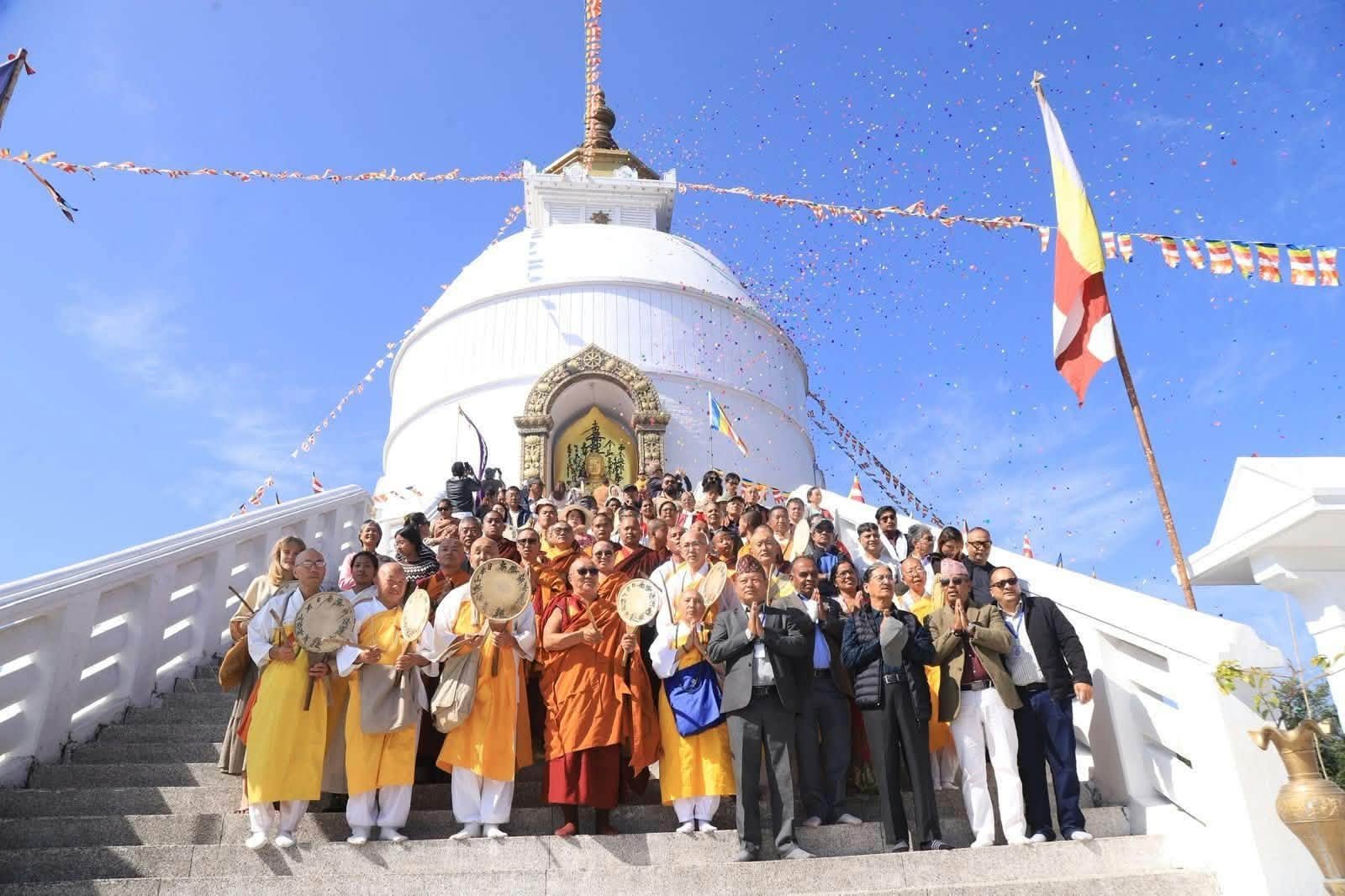
Pokhara, Nepal Japanese Buddhist monk Venerable Kansin Ikeda attended a ceremony in Pokhara on November 21 commemorating the 27th anniversary of the World Peace Stupa. Buddhist devotees and supporters gathered at the landmark, which was built to promote peace and non-violence.
Venerable Ikeda recently completed a 38-day peace pilgrimage in the United States and a 30-day pilgrimage in Canada. He has also completed a walking pilgrimage to Lumbini, the birthplace of Siddhartha Gautama. Photographs shared by Venerable Ikeda show the gathering at the Nipponzan Myohoji World Peace Stupa, which stands on Anadu Hill overlooking Phewa Lake and the city of Pokhara.
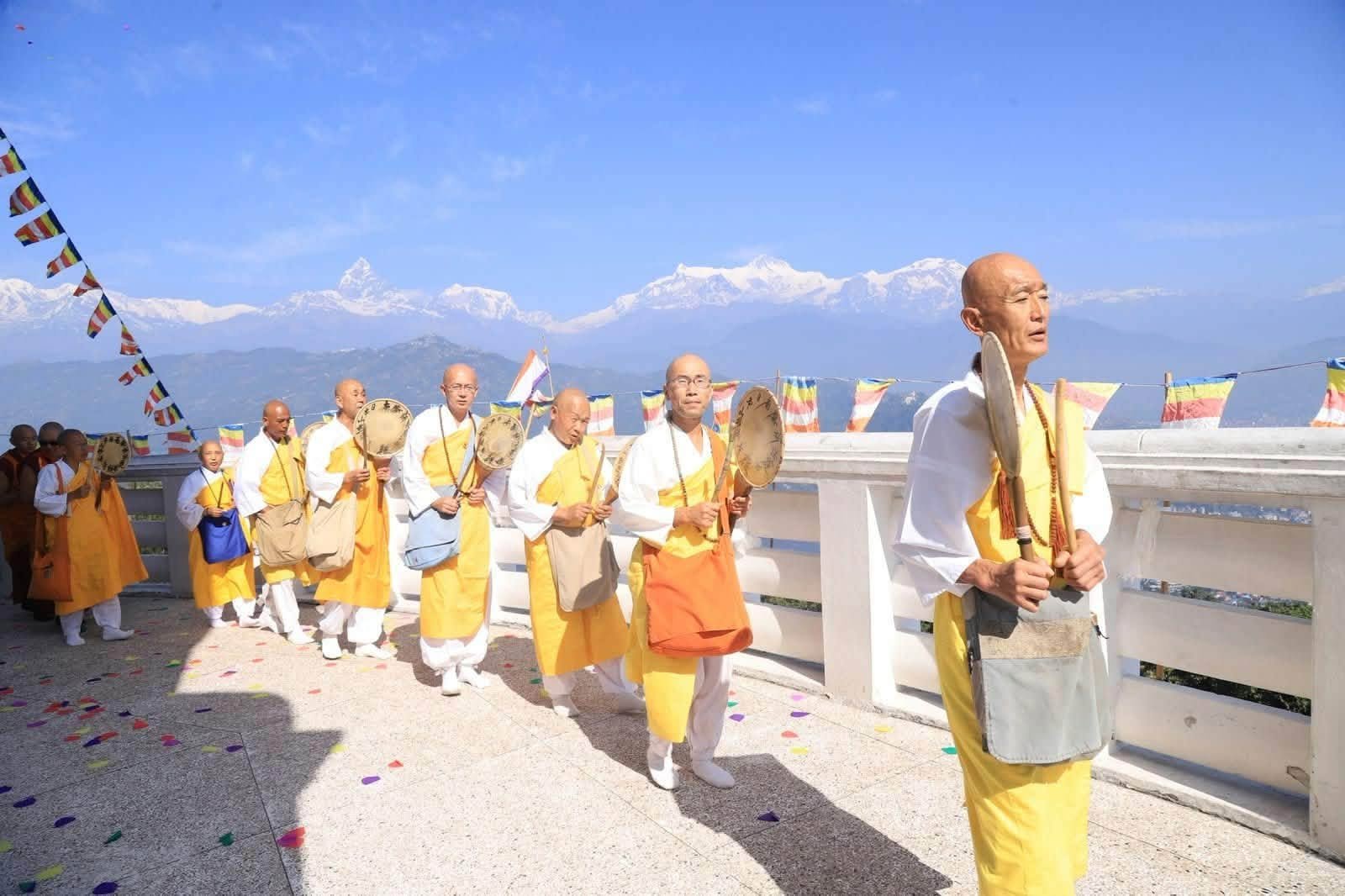
The history of the stupa dates back to Japanese Buddhist monk Nichidatsu Fujii, founder of the Nipponzan-Myōhōji Buddhist order. Influenced by his commitment to non-violence and his experiences following the Second World War, Fujii began a worldwide initiative to build Peace Pagodas as symbols of peace.
Fujii selected Anadu Hill for the Pokhara project and laid its foundation stone, accompanied by Buddha relics, on September 12, 1973. Construction was subsequently halted by the government, and the partially built structure was demolished. The project remained suspended for years.
On May 21, 1992, then Prime Minister Girija Prasad Koirala returned to the site and laid the foundation stone again, allowing construction to resume. The completed stupa was inaugurated on October 30, 1999, becoming Nepal’s first World Peace Pagoda.
Today, the white-domed monument is both a Buddhist place of worship and a well-known landmark. Four Buddha images face the cardinal directions, while the hilltop offers views of Phewa Lake, Pokhara Valley, and the Annapurna mountain range.
The ceremony brought renewed attention to the stupa’s long history and its continuing message of peace and non-violence.
Young Buddhists Propose National Association in Russia
Elista, Republic of Kalmykia, Russia Young Buddhists from several regions of Russia have proposed establishing an All-Russian Association of Young Buddhists following a forum held in Elista from November 12–16. The initiative received support from Buddhist clergy, including Geshe Yonten, chairman of the Central Spiritual Administration of Buddhists.
The forum, titled Be in the Know, Be Involved (Byt v teme, byt v dele), brought together young people aged 18–30 from Buddhist communities across Russia. A report by MK Kalmykia said 136 participants attended, representing Kalmykia, Buryatia, Tuva, Altai, Astrakhan Region, Moscow, and the Moscow Region. TASS reported approximately 150 participants.
According to reports from the forum, the proposal came from the young participants themselves. Buddhist clergy expressed their support and offered to help coordinate youth projects, while leaving their development and implementation to the younger generation.
The proposed association is intended to provide a platform for cooperation among young Buddhists from different parts of the country. Other ideas discussed at the forum included educational programmes for digital platforms, new pilgrimage routes connecting Buddhist sites, and exchanges between regional communities.
There are also early indications of how the association might take shape. Stepnye Vesti, a regional news outlet, reported that Geshe Yonten said organizational matters would be addressed before participants reconvened to elect an active leadership team or council and consider regional branches. National Television of Kalmykia reported that the organization could take shape in early 2027.
Buddhism has long-standing communities in several parts of Russia, particularly Kalmykia, Buryatia, and Tuva. A national youth association could help connect younger generations across these geographically separated communities and support joint educational and cultural projects.
The proposal is an important step toward closer cooperation among young Buddhists in Russia. However, the association has not yet been formally established. Its leadership, structure, and timetable remain to be decided.
Sources
1. TASS / Rambler — “Delegates Propose Creating Association of Young Buddhists at Forum in Kalmykia” TASS report via Rambler
2. MK Kalmykia — “Youth Buddhist Forum Concludes in Elista” MK Kalmykia report
3. Stepnye Vesti — “At the Forum in Kalmykia, Participants Decided to Create an Association of Young Buddhists of Russia” Stepnye Vesti report
4. National Television of Kalmykia — “Buddhism Without Boring Lectures, Creation of an All-Russian Youth Association…” National Television of Kalmykia coverage
5. Interethnic Russia — “Young Buddhists of Russia Unite in an Association”
Interethnic Russia report
Tibetan Monks Build Vaishravana Sand Mandala in St. Petersburg
St. Petersburg, Russia Five Tibetan monks from India’s Drepung Gomang Monastery are creating a sand mandala dedicated to Vaishravana, known in Tibetan as Namsarai, at Gunzechoinei Datsan in St. Petersburg. The visit includes a series of Buddhist rituals and ceremonies open to the public.
The delegation arrived in St. Petersburg on November 17 at the invitation of Gunzechoinei Datsan and the Drepung Gomang Centre. It is led by Geshe-Lharampa Lobsang Shakya.
According to the Datsan’s announcement, construction of the mandala began on November 19 following a ritual consecrating the ground and space. The work is scheduled to continue through November 24. Vaishravana is revered in Tibetan Buddhism as a protector of the Buddhist teachings and a deity associated with wealth and prosperity.
The program also includes ceremonies and prayers dedicated to several Buddhist figures and teachings, including White Tara, Kalarupa, the Medicine Buddha, and the Heart Sutra. Visitors can attend the ceremonies, observe the monks constructing the mandala, and participate in ritual circumambulations around it.
The Datsan says admission is free. It will announce the date and arrangements for the mandala’s symbolic dismantling separately.
Drepung Gomang is one of the major monastic colleges of the Gelug school of Tibetan Buddhism. Based in India, it maintains connections with Tibetan Buddhist communities internationally. The visit offers an opportunity for residents of St. Petersburg to encounter Tibetan Buddhist ritual practices and teachings.
Sources
1. Gunzechoinei Datsan — “The Drepung Gomang Monastery Delegation Is Back in St. Petersburg” Official announcement from Gunzechoinei Datsan
2. Drepung Gomang Centre — Event Schedule. Drepung Gomang Centre timetable
3. Nalanda — Buddhist Events Calendar, November 2026. Nalanda Buddhist calendar
Buddha Relic Exposition in India’s Arunachal Pradesh Concludes
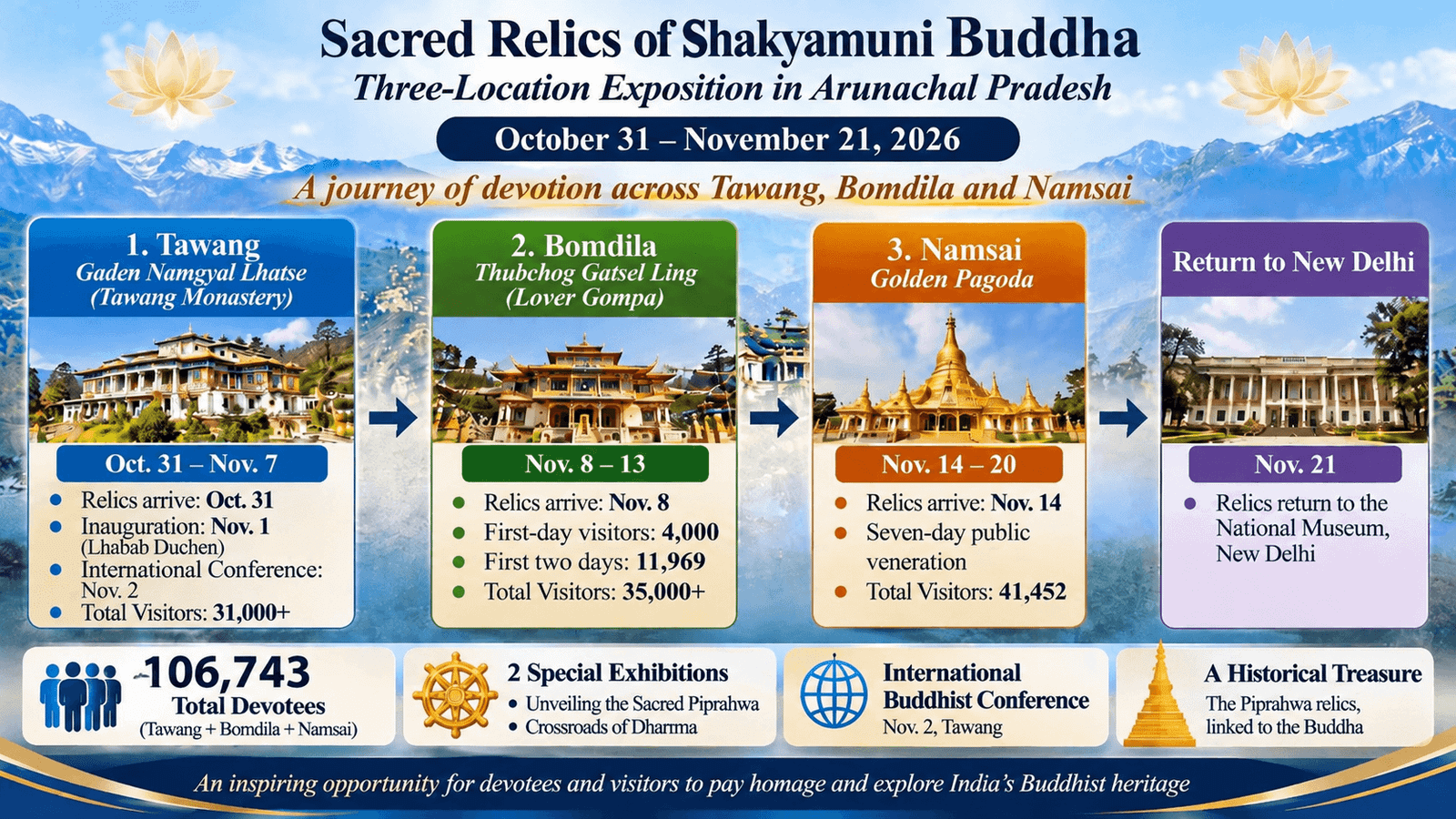
TEZU, Arunachal Pradesh, India A 22-day exposition of sacred relics of Shakyamuni Buddha in Arunachal Pradesh concluded on November 21 with a ceremonial farewell at Tezu Airport, where more than 3,000 devotees and members of the public gathered before the relics departed for New Delhi.
The relics, originating from the archaeological site of Piprahwa in Uttar Pradesh, had been brought from the National Museum in New Delhi to Arunachal Pradesh for public veneration. Their return marked the first time in 13 years that the relics had been displayed in the state, according to reports.
The exposition began at Gaden Namgyal Lhatse, also known as Tawang Monastery, where the relics were displayed from October 31 to November 7. They were then taken to Thubchog Gatsel Ling Monastery, or Lower Gompa, in Bomdila, from November 8 to 13. The final stage took place at the Golden Pagoda (Kongmu Kham) in Namsai from November 14 to 20.
Attendance figures released during the exposition showed strong public participation. More than 31,000 people visited Tawang, while Bomdila received more than 35,000 visitors. The Namsai exposition recorded 41,452 visits, according to reports published after the closing ceremony.
The official website established for the exposition displayed a total attendance figure of 106,743. The news agency United News of India (UNI) and Daily Excelsior, however, reported that overall participation exceeded 110,000.
The exposition was organized by India’s Ministry of Culture in collaboration with the Government of Arunachal Pradesh, the International Buddhist Confederation (IBC), and the National Museum in New Delhi.
The three venues reflected the diversity of Buddhist traditions in Arunachal Pradesh. Tawang and Bomdila are important centres of Tibetan Buddhist practice, while the Golden Pagoda in Namsai is a major centre of Theravada Buddhism.
The relics have now returned to New Delhi, where they will be placed back in the National Museum.
Sources
1. Press Information Bureau, Ministry of Culture, Government of India — Holy Relics of Lord Buddha to be Exposed for Public Veneration in Arunachal Pradesh from 31 October to 21 November 2026, October 30, 2026.
2. Government of Arunachal Pradesh — Official Sacred Relics Exposition website.
3. United News of India — Arunachal: 22-day Buddha relics exposition concludes with ceremonial farewell at Tezu.
4. The Arunachal Times — Buddha’s relics depart for New Delhi, November 22, 2026.