You Don’t Have to Face It Alone:How Clinical Chaplains Can Support Buddhists and Buddhist-curious Practitioners
By Ngawang Pema
Over the last year or two, you may have watched Walk for Peace monks on one of their journeys. Perhaps you remember them cresting a hill, a slender line of saffron robes glowing against the gray morning. People gathered quietly alongside the road. The monks moved at an even, patient pace. Each step was placed like a blessing. There was an indescribable quality to that moment. As you watched them pass, something in you may have relaxed – a tightness you did not know you were carrying. Your shoulders eased, and your breath slowed. The running list of worries and chatter faded, even if just for a moment. You weren’t trying to feel calm. It simply arrived like morning light entering a room. For a few minutes, the world felt kinder, as though everyone remembered something precious they had forgotten.
In contrast, in a hospital intensive care unit, a loved one arrives after the traumatic onset of life-threatening illness or a serious accident. The story that brought them here is raw and still unfolding. There was no time to prepare. Monitors beep and alarms sound. Family and friends stand in the hallway, and may feel numbness, panic, grief, anticipatory loss, trauma, or despair. Around them the staff moves swiftly with every action focused on keeping the loved one alive.
But even in this difficult setting, there may be an oasis of calm among the hospital staff.
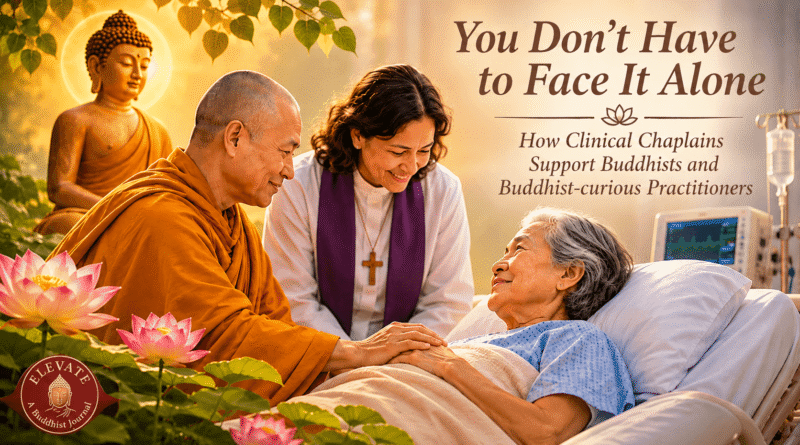
A chaplain’s essential function is to be a calming presence and to provide person centered care through listening deeply to a person’s story without trying to change it. Chaplains help people access their inner resources, find perspective, and navigate circumstances that may feel overwhelming. When trauma, stress, or illness disrupts awareness, insight, connection, meaning, or compassion, a chaplain also helps people reconnect with sources of resilience. In essence, a chaplain helps foster calm and bolster coping mechanisms. And just like the peace monks, their very presence can be reassuring. As a patient, family member, or friend, the chaplain is there to accompany you through that moment. People often report a sense of peace after the chaplain visits, even in the face of terrible circumstances.
In the United States, chaplains are often an underused resource. Whether you’ve practiced for decades, or became curious about Buddhism and just started reading about it last month, a chaplain can support you in difficult circumstances.
Buddhism, Spirituality, and Many Ways In
Not everyone drawn to Buddhism thinks of themselves as a particular kind of Buddhist, or as a Buddhist at all. Buddhism is best understood not as a single unified religion but as a family of related traditions (Theravada, Zen, Pure Land, Tibetan, and more)that share a common origin and core orientation but differ in practice, texts, and cultural expression. Many Buddhist traditions share foundational teachings such as the Three Jewels, the Four Noble Truths, and the Eightfold Path, while also developing different interpretations, practices, and philosophical approaches. Teachings on impermanence, dependent origination, and non-self also occupy important places across Buddhist traditions. A central concern is recognizing and ending suffering.
The Buddha tailored his teachings to the culture, situation, and capacity of his listeners. Rather than prescribing a narrow path, he taught from a wider view, and gave listeners guidance in how to determine if practices were valid according to sutra. In many countries, Buddhism is also combined with cultural heritage and family tradition. These precedents lead to unique customs among the traditions.
Many people explore Buddhism as a way to learn about spirituality itself. Spirituality refers to how people seek and express meaning and purpose, and addresses how they experience connection to the moment, themselves, others, nature, and the significant or sacred. Religion usually implies an institution with shared beliefs and practices, while spirituality is individual, so a person can have one without the other. However, without an institution to preserve the wisdom of a tradition, it becomes difficult to understand and practice. Recent efforts by Richard Davidson and others helped translate the wisdom of the world’s religious traditions into a clear and scientific map for flourishing. For example, in Born to Flourish, the authors discuss awareness, connection, purpose, and insight as key elements of human flourishing. Whatever your way in, a chaplain can meet you where you are.
Who Chaplains Are
A chaplain is typically a clinically trained and credentialed spiritual care professional who assesses the spiritual, religious, existential, and emotional needs of patients, families, and staff as part of the interdisciplinary care team. The same chaplain will serve atheists, monotheists, non-theists, and polytheists as well as people who are curious about religion, well established in a tradition, or not interested in religion at all. They serve in hospitals, skilled nursing facilities, prisons and jails, communities, and even corporate settings.
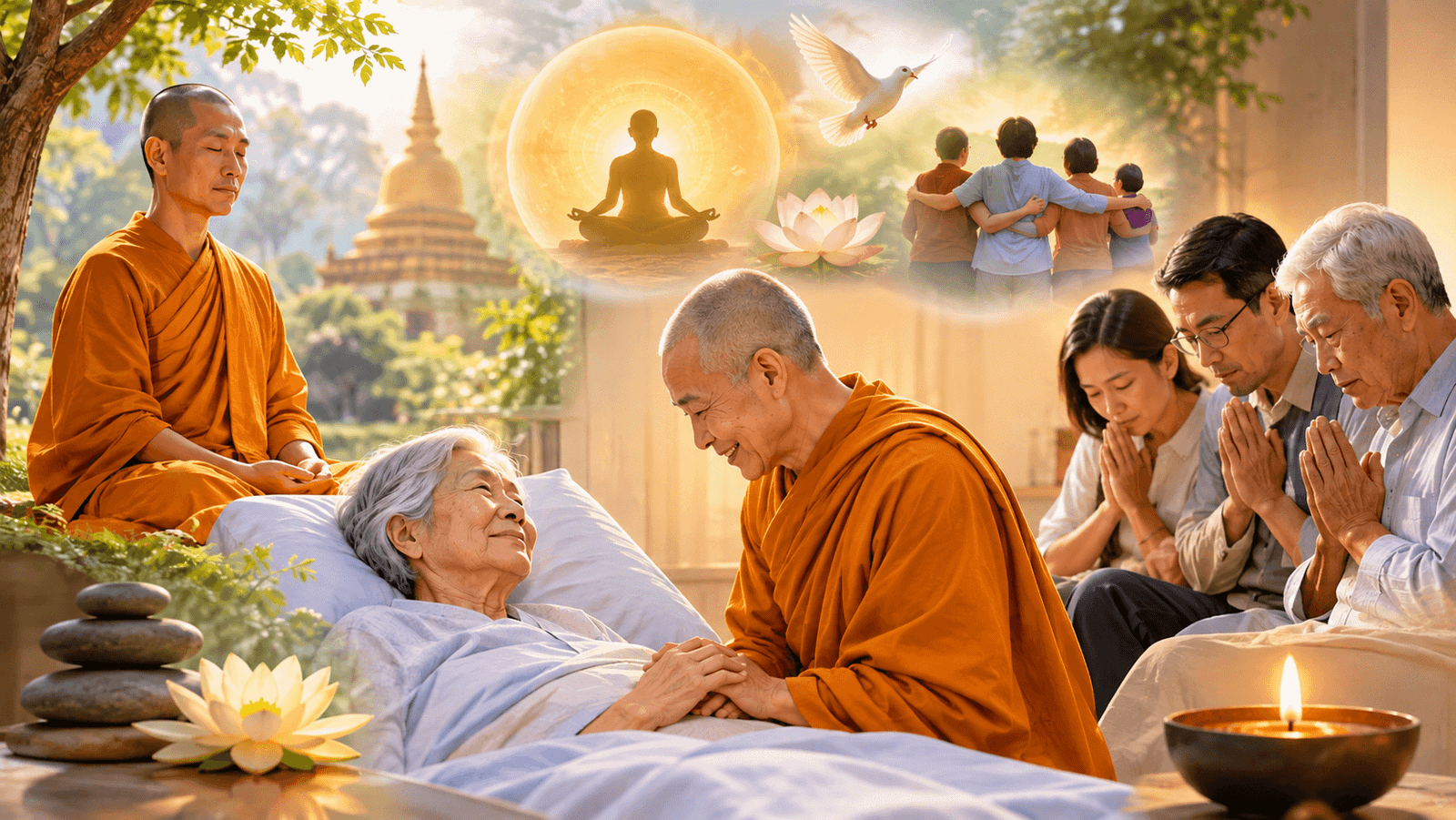
A common misconception is that a chaplain is there to promote a religious agenda. That may be a role of a visiting clergy member representing their specific faith community, but chaplains serve within the context of the patient’s own beliefs, values, and preferences.
Board-certified chaplaincy is among the most demanding of the master’s-level helping professions, generally requiring a long 72-credit master’s degree, faith-group endorsement (usually requiring an additional year-long internship), one year of on-the-job training, 3,000 experience hours, and certification by an independent peer committee. Chaplains who are still completing their clinical training may also be able to provide spiritual support under appropriate supervision. If you have specific Buddhist practices or religious needs, you can ask about the chaplain’s training and experience in supporting Buddhist patients. If you are unsure whether you want a visit, you can ask the chaplain what training they have and whether they feel equipped to support you.
Because chaplains offer support for issues common to all of humanity, they are not required to disclose their own faith tradition. They may decline to answer if asked. You can request a chaplain with training in your faith tradition if you have specific ritual or scriptural interpretation needs, but base the request on those needs rather than learning the chaplain’s own faith tradition.
What Chaplains Do
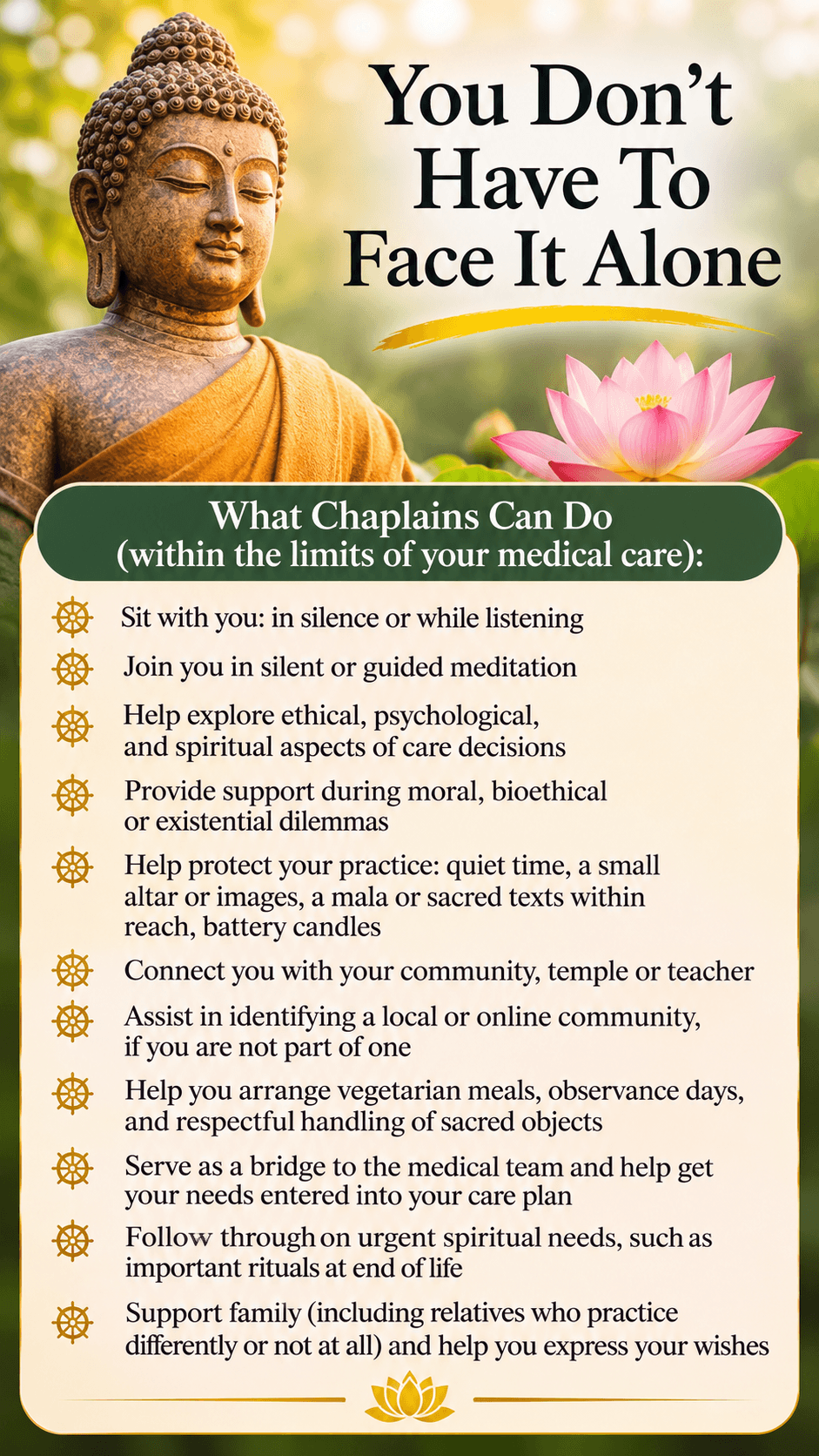
Chaplains can help you generate a calm mind, facilitate communication, advocate for practice needs, help you access resources, and more. Chaplains can also give voice to heartfelt sentiments or familiar prayers when it is difficult to speak. The enclosed list can be used as a reference for many of the services chaplains provide.
Beyond the bedside, chaplains support healthcare staff resilience, family coping and wellbeing, patient dignity at end-of-life, trust and healthcare utilization in marginalized communities, and other social determinants of health. Because chaplains are trained in cultural pluralism and often seen as independent of provider bias, they can serve as trusted liaisons between institutional medicine and patients from spiritually oriented or historically marginalized communities. This is critical when difficult ethical or end of life decisions arise and communication has broken down or when a decision maker is frozen by lack of clarity, fear, or grief.
What to Expect During a Visit
During a visit, a chaplain will conduct a short, friendly assessment, usually by inviting your story rather than asking direct questions. Tools such as HOPE or FACT help them listen for beliefs, practices, community, sources of hope, and how these should shape your care. Deeper assessments may be used in harder situations, such as an existential crisis or a prolonged intensive care stay. Chaplains weigh a person’s coping resources against their needs, so those with greater needs receive more time and visits. Emergencies and those who are most seriously ill also receive priority. Afterward, chaplains update your care plan, share your needs with your medical team, and follow through on the support you need.
In a hospital, so much is decided for you. A chaplain’s visit is one thing you can choose. You can decline a visit or ask a chaplain to leave at any time, knowing it won’t affect the rest of your care. After a day of being checked, tested, and interrupted, simply saying “Not now” can be a relief. Chaplains understand that sometimes the most caring thing they can do is step away so you can sleep, rest quietly, or spend time with family. They will remain available by request throughout your stay, or may check on you during regular rounding.
How to Ask for What You Need
When you are admitted, you or a family member will be asked if you have a spiritual tradition that you practice. If this step is skipped, you can tell your staff and ask to have it added to your record. Some hospitals list only “Buddhist,” while others list the main Buddhist traditions. They may also allow you to choose, “Spiritual Not Religious.” If you like, give your temple name or teacher’s contact information. Your spiritual designation may stay with your medical record at that institution, so you won’t need to repeat it at every admission. You may request a chaplain visit or change your designation at any time by speaking with a nurse or other care provider.
While at a hospital or other care facility, you can ask for accommodations that reflect your beliefs and practices. Refer to the checklist for options to discuss. Staff will work with you to the extent possible. For example, you might explain that you are drawn to Buddhist practice and would appreciate quiet time to meditate.
Your local temple or center may not know you are sick or in crisis unless someone tells them. Call your temple or teacher directly, or ask the chaplain, a family member, or a friend to call for you. Give the chaplain the contact information and clearly state that you give permission to call, since hospital staff cannot share your information without it. Identify a point person in your sangha, and keep their number with your advance directive and in your wallet or phone’s emergency info.
At the End of Life
Buddhist end of life care deserves its own article, but a few tips can help you plan. Buddhist traditions emphasize a calm, mindful death. Chaplains and medical providers can help arrange the room environment, schedule chanting, and invite teachings or a teacher’s presence. A chaplain can also help open conversations about balancing pain management with alertness. Some traditions specify that the room be cleaned before death with important personal items placed in the room, and others that the body be left undisturbed for a time. If life support must be withdrawn, it can sometimes be scheduled according to the tradition’s recommended times.
Isolation from community at nursing homes can be a risk, so if you are early in end of life care, ask about recurring chaplain visits, volunteers, virtual services, or a group sitting. Present your practices as part of your daily routine, not as a special request.
Review your advance directive periodically and whenever your circumstances or wishes change. Make sure the person named in your healthcare power of attorney understands your preferences.
How Communities Can Help
It can be difficult for chaplains and medical staff to reach monks, nuns, or other Buddhist leaders, particularly when leaders do not answer the phone regularly or speak little or no English. Temple leaders, staff, or board members can introduce themselves to local chaplains before a crisis occurs. Communities can also establish a simple way for members to report illness, including publishing an emergency contact number and a process to coordinate visits. Larger communities might ask local hospitals and skilled nursing facilities whether Buddhist practitioners or volunteers are needed. Smaller centers can identify beginner-friendly volunteer roles, so experienced practitioners remain available to provide specialized support when requested.
You Don’t Have to Face It Alone
Emotions are contagious. Just like the Walk for Peace monks’ steady presence affected people along the road, a chaplain’s steadiness can offer reassurance to patients, family members and friends during difficult times.
Buddhist practitioners cultivate steadiness through practice, but steadiness is not something we must sustain alone. We can support it in one another. In this way, asking for help becomes part of a supported practice. You can talk with family now about your preferences, find your nearest Buddhist community, and make your friends, fellow practitioners and healthcare providers aware of your preferences for chaplain and spiritual care.
In times of challenge, may your chaplain bring you a peaceful, calm presence to support you in your journey.
About the Author
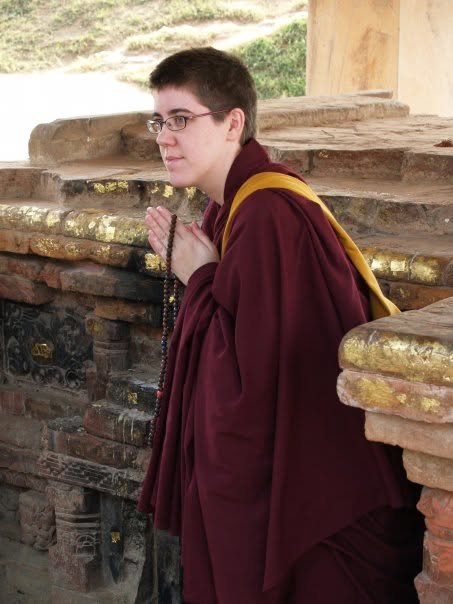
For over 10 years, Ngawang Pema (Lisa Antoniotti, MSE, DMin.) has served as a chaplain in hospitals and prisons, where she has been honored to accompany people through illness, crisis, and the end of life. As an advance care planning educator, Pema has helped people put their wishes into words, a theme she explores in “Empowering Peace in Health Care Decisions” (Buddhistdoor Global,2025). Pema was ordained as a monastic in 2002 and has participated in the White Conch teacher training program since 2005. A lifelong student of the Dharma, she has completed more than 21 months of supervised retreat. With permission, she co-founded Joyful Path in Madison, Wisconsin, where she continues to learn alongside fellow practitioners.