When Our Actions Become Our Sorrow
Have you ever done something…
and later wished you could take it back?
Sometimes the consequences of our actions don’t appear immediately.
But sooner or later, our actions can return to us—
as regret,
as fear,
or as suffering.
The Buddha reminds us: What we do today can shape the suffering or happiness we experience tomorrow.
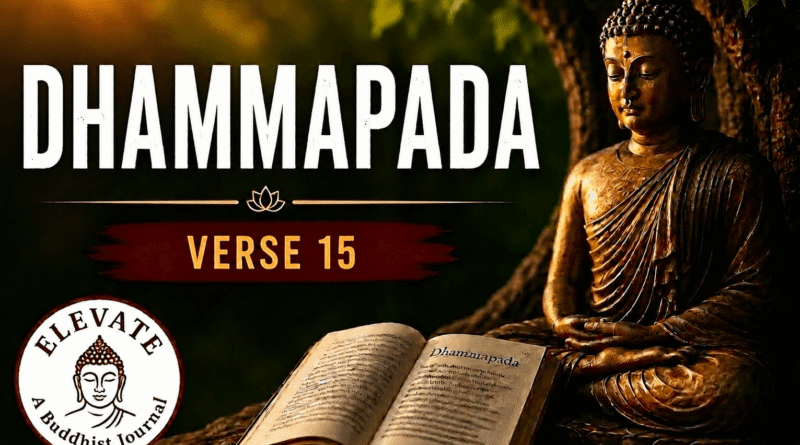
In this section, we explore Dhammapada Verse 15.
The evil-doer grieves in this world, and grieves in the next. In both worlds, the evil-doer grieves, seeing the impurity of their own actions.
This verse was spoken by the Buddha in reference to Cunda, a pork butcher who lived near the monastery at Rājagaha.
For many years, Cunda made his living by killing animals.
Although the Buddha lived nearby, Cunda never offered alms, never performed acts of generosity, and showed little concern for spiritual practice.
According to the traditional story, near the end of his life, the consequences of his actions became overwhelming.
He became terrified and began behaving like a distressed animal.
For seven days, his family could not calm him.
Eventually, he died.
The Buddha explained to the monks that Cunda was experiencing the painful consequences of his past actions—and that his suffering continued beyond this life.
The Buddha’s teaching is not simply about punishment.
It is about cause and effect.
When we repeatedly act with cruelty, hatred, dishonesty, or greed, those actions don’t simply disappear.
They shape our character.
They influence our habits.
And eventually, they can become a source of suffering for ourselves and others.
But there is also hope.
If harmful actions can create suffering…
then wholesome actions can create happiness.
We are not helpless prisoners of our past.
Every moment gives us another opportunity to choose differently.
Before you speak…
before you act…
before you make a choice—
pause and ask:
“If this action returns to me, what will it bring?”
Because every action plants a seed.
And sooner or later,
we live with what we have planted.
Our past may explain where we are…
but our present choices shape where we go next.
Thank you for watching.
May you be well, may you be peaceful, and may your actions always become causes of happiness rather than sorrow.