
From a Single Drop to a Sea of Peace
There is a simple wisdom that resonates deeply in the Himalayan tradition: an ocean begins with a single drop.
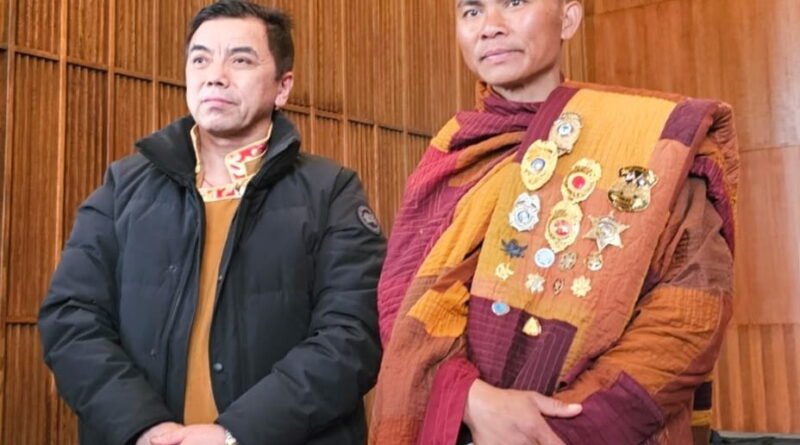
For Dindu Lama Hyolmo, that simple idea took on a profound personal meaning during the Walk for Peace. From helping organize meals for the pilgrims in North Carolina to walking behind them during the final days of their journey in Washington, D.C., his contributions may have seemed modest when measured against a pilgrimage spanning thousands of miles.
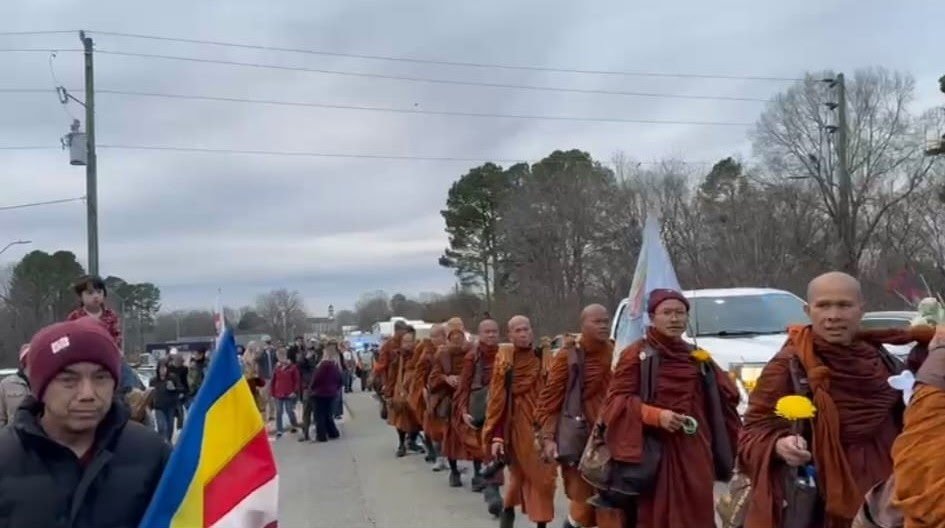
Standing among the thousands gathered in the nation’s capital, he began to see those individual efforts differently. At the heart of the Walk for Peace was a small group of monks, led by Venerable Bhikkhu Pannakara, who made the extraordinary decision to walk thousands of miles carrying a message of peace. Their courage, discipline, and perseverance inspired communities across America to open their doors, offer hospitality, and become part of the journey.
“The Walk for Peace proved that peace is not built by one extraordinary act—it is built by thousands of ordinary people walking together toward one shared vision.”
The monks carried the message across the miles; communities across America carried it forward through their prayers, meals, hospitality, generosity, and countless acts of kindness. What began with the monks’ extraordinary commitment grew into a collective expression of peace that crossed cultural, geographic, and religious boundaries.
For Dindu, who has spent three decades building a life between two cultures, the experience became more than a memorable event. It became a reflection on belonging, spirituality, community, and the unexpected ways in which one person’s journey can become part of something much greater than itself.
When Dindu arrived in the United States, he expected to stay only two or three years. Like many immigrants, his plan was simple: work, save some money, and eventually return home. Three years became ten. Ten became twenty. And eventually, thirty. Over the years, he built a life through hard work, entrepreneurship, philanthropy, and community service. America gave him a new life. Himalayan Buddhism continued to give that life its spiritual roots.
Spirituality had been part of his family history for generations. Members of his family had served as Lamas and spiritual practitioners, and the traditions of his village remained an important part of his identity even after thousands of miles separated him from home.
Running a restaurant seven days a week leaves little time for extended meditation or retreat. Yet Dindu has maintained a simple daily practice centered on Dolma, or Green Tara. He spends about thirty minutes each day in prayer and chanting. He describes the effect in remarkably ordinary terms: “It is like morning coffee.” Just as coffee helps people wake up and prepare for the day, his prayers give him a sense of freshness, focus, and confidence. More importantly, they keep him connected to the spiritual tradition he inherited from his homeland. But his connection to Buddhism goes much deeper.
Long before he became a restauranteur and philanthropist in America, Dindu dreamed of becoming a Gyalung (Lama) — a Himalayan Buddhist monk—and dedicating his life to the Dharma. Growing up in the Himalayan Buddhist tradition, he participated in spiritual practices and spent several days in cave retreats. During those days he wished to join a three-month cave retreat, which never fulfilled. During those retreats, he hoped one day to undertake a three-month cave retreat, but that aspiration was never fulfilled.
At one point, he had saved enough money to travel to India, intending to join a monastery associated with the Dalai Lama. But then life placed another responsibility before him. His uncle, who adopted him and raised him as his own child, passed away. He recalls that leaving for a monastic life would mean abandoning the duty towards his family and therefore he decided to stay behind.
And so, the young man who had dreamed of becoming a monk remained a layperson. He describes it simply as fate. He had made the effort, he says, but perhaps it was not his destiny to follow the monastic path in the way he had imagined. But the aspiration never disappeared. He continued participating in Buddhist rituals and maintaining his daily practice after moving to America.
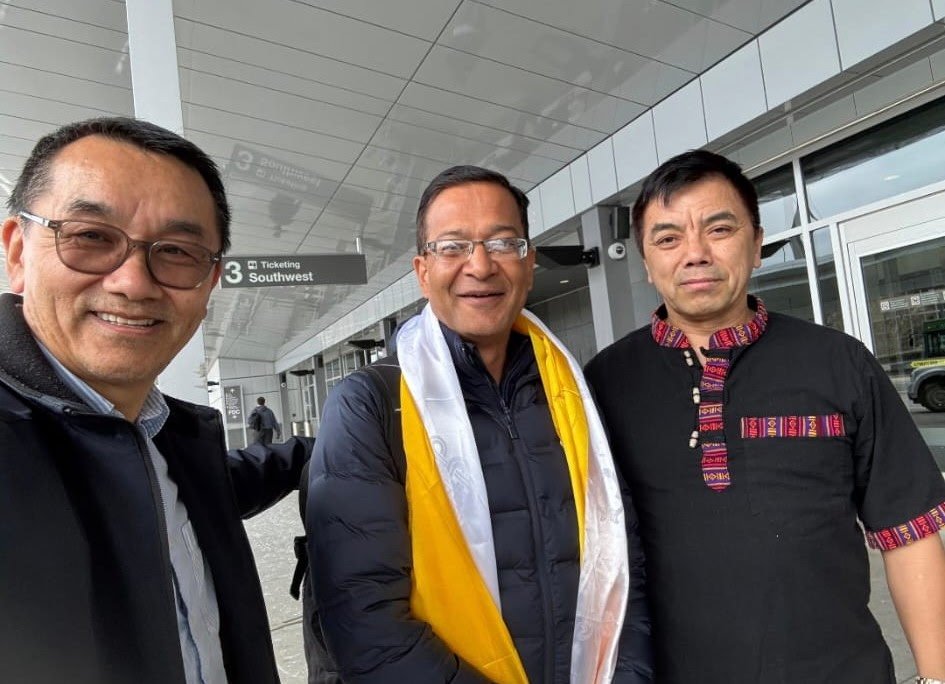
Perhaps his story isn’t about a man who failed to become a monk. It is about a spiritual aspiration that found another way to express itself. That connection became especially meaningful when Dindu learned that the Walk for Peace was approaching Atlanta and would pass through North Carolina. He rushed to see the monks as they entered North Carolina.
For him, supporting the pilgrims was more than helping with a community event. It was an opportunity to participate in something aligned with a value he had carried throughout his life: the aspiration for peace. When the monks arrived in Siler City, he quietly joined them on the road. In Raleigh, the response from the community left a lasting impression. The weather was bitterly cold, and a weather emergency had been declared. Yet people came out. Elderly people and children, some wrapped in blankets, waited for hours simply to see the monks pass.
For the local Nepalese and Sherpa communities, the question quickly became practical: How could they help? Dindu and his friends helped coordinate lunch and logistical support for the pilgrims. Their reasoning was simple. If the monks were willing to walk thousands of miles carrying a message of peace, providing a warm meal was the least they could do.
It was a small contribution—but one that helped make the larger journey possible.
The Final Steps in Washington
The most powerful moment came at the end of the journey in Washington, D.C.
Dindu walked behind the monks during the final two days. He had already witnessed the response in North Carolina, but nothing prepared him for the scale of the gathering in the nation’s capital. At the Lincoln Memorial, thousands of people had gathered. The crowd was so large, he recalled, that there was barely room to move.
For him, the sight carried particular significance. “Here was a Buddhist-led message of peace drawing enormous public support in a country where Christianity is the dominant religious tradition,” he recalls. Yet the gathering did not feel divided by religion. “People had come because peace itself needed no religious translation.”
For Dindu, the experience offered what he described as a “double benefit.” He had contributed his own small “drop” to the Walk for Peace while also gaining the opportunity to meet revered Buddhist spiritual figures—not only the monks undertaking the Walk, but hundreds of other Buddhist monks representing different traditions. Among those he remembers meeting were Shingza Rinpoche and Tencho Gyatso, niece of His Holiness the Dalai Lama, during the overnight stop at Marymount University on February 9.
For someone who had once dreamed of becoming a monk himself, walking behind these monks during the final miles carried a meaning that went beyond the event. From a single drop came a sea of peace. And somewhere within that sea, Dindu found his own place.
By Elevate Editorial Desk

Such a beautiful, heartfelt story.
What if a stone in a river changes the trajectory of the river…………….
Beautiful and inspiring story. Dindu Lama Hyolmo’s journey reminds us that even a small act of kindness can become part of something much greater. His lifelong connection to Buddhism, service to the community, and participation in the Walk for Peace beautifully reflect the message that an ocean truly begins with a single drop. Wishing him continued strength and success in spreading peace, compassion, and unity.
Oh wow! Thank you for this beautiful and inspiring story. It reminds me all the beauty of this event.🙏🙏🙏